
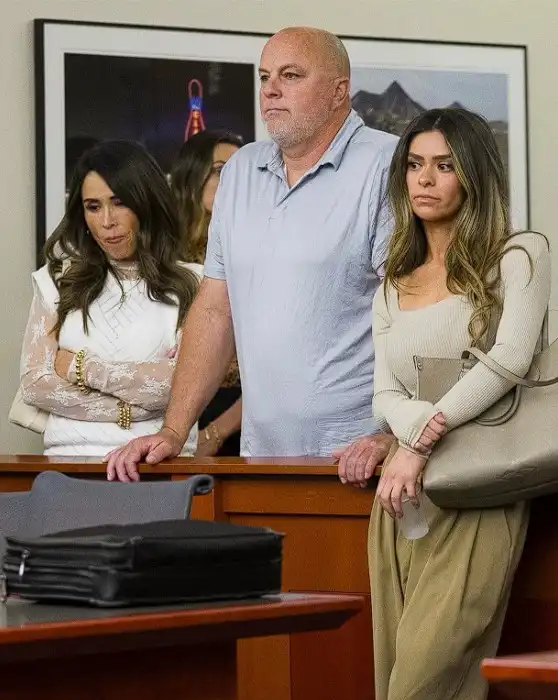
The Utah courtroom became the center of intense public attention after social media personality Taylor Frankie Paul appeared in a deeply emotional legal hearing involving her former partner, Dakota Mortensen. What unfolded was not just another legal proceeding, but a highly personal moment involving family members, emotional exchanges, and formal legal arguments presented before the court.
As interest in influencer-related legal cases continues to grow, this hearing has become a focal point in discussions about how personal relationships, family dynamics, and legal systems intersect under public scrutiny.
A Courtroom Scene Marked by Emotion and Tension

Courtrooms are typically structured, formal environments where emotional expression is limited. However, in this case, observers described an atmosphere that felt more personal than procedural.
Taylor Frankie Paul was present alongside members of her family, while Dakota Mortensen also appeared with his side of the family, including his mother. The presence of both families highlighted the deeply personal nature of the dispute and how it extends beyond just two individuals.
One of the most discussed moments from the hearing was an emotional interaction involving Taylor Frankie Paul and Dakota Mortensen’s mother. Reports indicate that there was a respectful and emotional exchange, including a brief hug, which stood out in an otherwise formal legal setting.
While courtroom interactions like this are uncommon, they are not unheard of in emotionally charged family-related cases. They often reflect long-standing personal relationships that exist outside of legal disputes.
Understanding the Legal Nature of the Case
At the center of the hearing are ongoing family-related legal matters, which typically involve issues such as protection orders, communication restrictions, and disputes connected to personal relationships.
Although specific filings are often kept private in family court settings, cases like this generally revolve around:
- Allegations of conflict or communication breakdown
- Requests for protection orders between individuals
- Concerns regarding safety or emotional well-being
- Co-parenting or custody-related considerations when children are involved
- Court-imposed restrictions on contact or communication
Protection orders, in particular, are legal tools designed to prevent unwanted contact between parties when a court determines that such restrictions may be necessary for safety or peace.
What a Protection Order Means in Utah Courts
To understand the significance of this case, it is important to understand how protection orders function in Utah’s legal system.
A protection order may include conditions such as:
- No direct contact between parties
- No indirect communication through third parties or social media
- Required physical distance between individuals
- Temporary arrangements involving custody or visitation (if applicable)
- Restrictions on harassment or public communication
These orders are civil in nature, meaning they are not criminal convictions. However, violating them can result in legal penalties, including fines or arrest.
Judges evaluate these requests based on evidence, testimony, and legal standards that determine whether protection is necessary.
Statements Made Through Legal Representation
During the hearing, Taylor Frankie Paul’s position was primarily communicated through her legal counsel rather than personal testimony in open court. This is a common legal strategy in sensitive cases.
Lawyers often speak on behalf of clients to:
- Present formal legal arguments
- Avoid emotionally charged statements in court
- Ensure communication aligns with procedural rules
- Protect privacy during ongoing legal disputes
Her attorney issued a statement to represent her position, though specific details remain limited due to the confidential nature of family court proceedings.
Dakota Mortensen’s side also presented their arguments through legal representation, creating a structured exchange of claims and responses for the judge to consider.
Why Family Members Were Present in Court
One notable aspect of the hearing was the visible presence of family members from both sides. In emotionally charged legal disputes, especially those involving relationships or co-parenting, family members often attend court for support.
Their presence can serve several purposes:
- Emotional support for the parties involved
- Observing proceedings firsthand
- Providing context for personal circumstances outside court testimony
However, it is important to note that while family presence can be emotionally significant, judges base decisions strictly on legal arguments, evidence, and testimony presented in court.
Why This Case Draws Public Attention
This legal dispute has gained widespread attention due to several overlapping factors that extend beyond the courtroom itself.
1. Influence of social media presence
Taylor Frankie Paul is a known social media figure, which means public interest in her personal life is significantly higher than average legal cases.
2. Emotional courtroom moments
Interactions between families, emotional gestures, and visible tension naturally attract public curiosity.
3. Online amplification
Content related to the case spreads quickly across TikTok, Instagram, and YouTube, often before full context is available.
4. Curiosity about influencer relationships
Audiences often follow influencer relationships over time, making developments in their personal lives feel more immediate and engaging.
The Role of Social Media in Legal Narratives
One of the defining characteristics of modern legal news involving influencers is how quickly narratives develop online.
Unlike traditional legal cases that remain mostly private, influencer-related disputes often:
- Become topics of online discussion within hours
- Generate commentary and speculation from audiences
- Lead to fragmented interpretations of courtroom events
- Spread across multiple platforms simultaneously
This creates a situation where public perception may form before official legal conclusions are reached.
Legal Process and What Happens Next
Family-related legal disputes such as this one typically follow a structured legal process, which may include:
- Filing of petitions or requests for protection orders
- Temporary court orders (if deemed necessary)
- Formal hearings where both parties present evidence
- Judicial evaluation of testimony and legal arguments
- Final decision regarding protection orders or related requests
Depending on the outcome, the court may grant, modify, or deny protective measures.
In some cases, additional hearings may be scheduled if circumstances change or further evidence is presented.
The Human Side of Legal Proceedings
While legal cases are often analyzed in terms of arguments and rulings, courtroom proceedings like this one highlight the human dimension behind legal disputes.
Emotional interactions between family members, personal statements delivered through attorneys, and visible tension in court all reflect the reality that these cases involve real people dealing with complex relationships and emotional challenges.
Family court, in particular, often deals with sensitive issues that extend far beyond legal technicalities.
Media Coverage and Public Interpretation
As with many influencer-related legal matters, media coverage plays a significant role in shaping public understanding of the case.
However, there is an important distinction between:
- Verified legal information from court proceedings
- Media summaries of events
- Social media commentary and speculation
Because court proceedings are often partially confidential, especially in family law, the full context is not always publicly available.
Legal experts often caution that courtroom cases should be understood through official rulings rather than fragmented online discussions.
Conclusion
The Utah courtroom appearance involving Taylor Frankie Paul and Dakota Mortensen underscores the deeply personal and emotional nature of family-related legal disputes. While the proceedings are grounded in legal arguments involving protection orders and related matters, the presence of family members and emotional moments in court highlight the human impact behind the case.
As the legal process continues, further developments will provide more clarity on the outcome. For now, the case stands as a clear example of how personal relationships, legal systems, and public attention intersect in today’s digital and media-driven environment.



Leave a Reply