
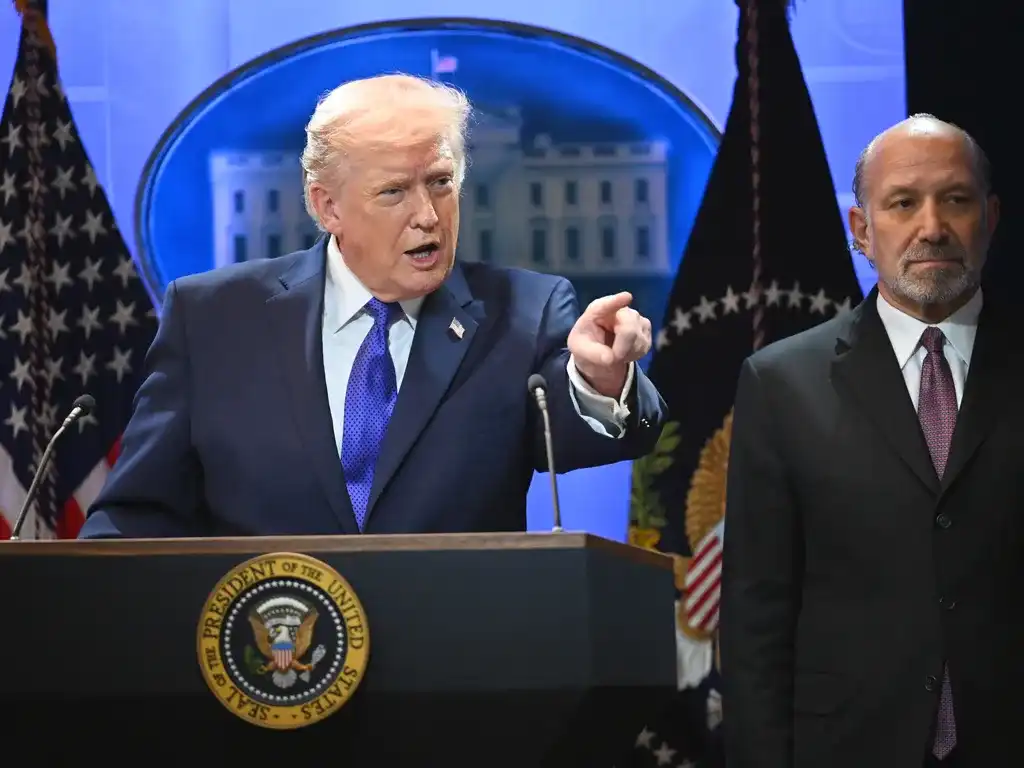
In a dramatic escalation of U.S. trade policy, President Donald Trump announced that he is raising a new global tariff rate to 15% on imported goods — just one day after the U.S. Supreme Court ruled that many of his earlier tariffs were illegal. The move has major implications for international trade, consumer prices, global markets, and U.S. relations with key allies. Here’s the full story behind the headlines.
What Happened: Supreme Court Strikes Down Previous Tariffs
On Friday, the U.S. Supreme Court issued a 6–3 decision striking down much of Trump’s tariff program, ruling that the president had exceeded his authority by relying on the International Emergency Economic Powers Act (IEEPA) to impose broad import taxes. According to the court’s majority opinion, the Constitution clearly gives Congress — not the president — the power to impose taxes and tariffs.
After the ruling, Trump first announced a new 10% global tariff using alternative legal authority under Section 122 of the Trade Act of 1974, which allows temporary import surcharges up to 15% when the United States faces serious balance‑of‑payments issues or economic concerns.
But less than 24 hours later, the president boosted that tariff rate to 15%, the maximum permitted under the law — calling it “fully allowed, and legally tested” — and said it would take effect immediately.
Why This Matters: Legal and Political Context
Supreme Court Rebuke
The Supreme Court’s ruling stopped Trump’s original tariff strategy in its tracks and dealt a rare rebuke to the executive branch’s attempt to use broad emergency powers for nationwide economic policy. The justices ruled that the power to levy taxes and duties lies with Congress, not the president acting alone.
That decision marked a new era of judicial oversight of executive trade actions and forced the administration to find alternative authority — such as Section 122 — to keep tariffs in place.
New Legal Authority and Temporary Limits
Section 122 of the Trade Act of 1974 has never before been used in this way. It permits a temporary global tariff for up to 150 days — after which Congress would need to authorize an extension. If lawmakers do not approve it, the tariff could expire.
This legal shift reflects both a workaround and a limitation: Trump can keep tariffs in place for now, but long‑term trade policy must involve Congress.
How the 15% Tariff Works
Who It Applies To
The 15% tariff is a flat global duty on a wide range of imported products from most countries. Certain critical imports — such as energy products and minerals — may be exempt or treated differently under trade agreements.
Unlike targeted tariffs that focus on specific nations, this flat levy applies broadly and uniformly under the law that Trump’s administration is using.
Economic Rationale Cited by Trump
The president and trade officials argue that higher tariffs protect U.S. manufacturers, encourage domestic job growth, and address trade imbalances with major trading partners. Trump described the tariff increase as a tool to prevent countries from “ripping off” the U.S. economy through unfair trade practices.
However, critics—including legal experts and economists—say the impact on consumers and supply chains could outweigh those benefits.
Reactions from Around the World
U.S. Allies and Trade Partners
Some U.S. allies have expressed concern over the sudden tariff increase and the unpredictability of U.S. trade policy:
- European Union officials have urged the U.S. to honor existing trade commitments and avoid disruptive unilateral tariffs that could undermine global commerce.
- China’s commerce ministry announced it was assessing the ruling and the new tariff, warning that politicized trade measures could harm supply chains and economic stability.
These responses reflect rising concerns among global partners about the future of trade cooperation with the U.S. amid tit‑for‑tat tariff escalation.
Impact on the Global Economy
Market Reactions
Financial markets have shown significant volatility in response to the tariff news:
- Dow Jones futures fell as investors reacted to the latest tariff hike and uncertainty over long‑term trade policy.
- Some analysts warn that tariffs could slow economic growth by raising costs for U.S. companies that rely on imported inputs.
Tariffs generally prompt higher prices for consumers, as businesses often pass the cost of duties onto buyers in the form of increased prices. This has raised concerns about inflation and reduced consumer spending power.
Industry and Business Concerns
Many companies that rely on global supply chains say the unpredictable tariff environment is disruptive and costly. Higher duties on imports from major trading partners — including the EU, UK, Japan, and others — could affect sectors from manufacturing to retail.
Moreover, businesses are facing increased uncertainty over whether tariffs will remain in place beyond 150 days without congressional support.
Political Fallout and Domestic Debate
Supporters of the Tariff Increase
Trump’s supporters argue that stronger trade barriers protect American jobs and strengthen negotiating positions with trading partners who run persistent trade surpluses with the U.S.
Some conservative commentators view the tariff hike as a necessary counterweight to decades of global trade policies that they say have favored other nations.
Critics in the U.S.
Opposition to the tariff hike comes from both economic and political corners:
- Democratic lawmakers have criticized the policy for burdening American consumers with higher costs and increasing risk for small businesses.
- Legal experts like Neal Katyal — who previously challenged Trump’s tariffs — have questioned whether the new 15% levy will withstand future legal scrutiny.
Critics also argue that the tariff escalation sidesteps Congress, undermining constitutional trade powers and leading to economic instability.
What Comes Next: Legal and Economic Uncertainty
Tariff Refunds and Legal Challenges
One unresolved issue is whether companies could reclaim duties collected under the previously struck‑down tariffs. U.S. officials have acknowledged there will likely be legal disputes over refunds, with lower courts expected to weigh in on how collected funds should be handled.
Congressional Role
Because Section 122 tariffs are temporary, Congress will play a key role if the administration seeks to extend the 15% rate beyond 150 days or enact longer‑term trade measures — a politically fraught path given public concerns about consumer prices.
Global Trade Dynamics Ahead
In a world deeply interconnected through global supply chains, uncertainty over U.S. trade policy could reshape investment decisions, corporate strategies, and diplomatic negotiations in the coming months.
The tariff battle highlights how economic policy, judicial decisions, and political disputes intersect to influence not just Wall Street or Washington — but households and businesses around the world.
Conclusion: A Defining Moment in U.S. Trade Policy
President Trump’s decision to raise global tariffs to 15% — immediately following a Supreme Court ruling that invalidated his earlier approach — marks one of the most consequential developments in recent U.S. trade history. Built on alternative legal authority, the tariff hike has sparked debate over executive power, constitutional limits, and the economic costs of aggressive protectionism.
As the policy unfolds, businesses, lawmakers, and international partners will be closely watching whether the tariff will persist, how Congress responds, and what long‑term effects this shift will have on global trade dynamics.



Leave a Reply