
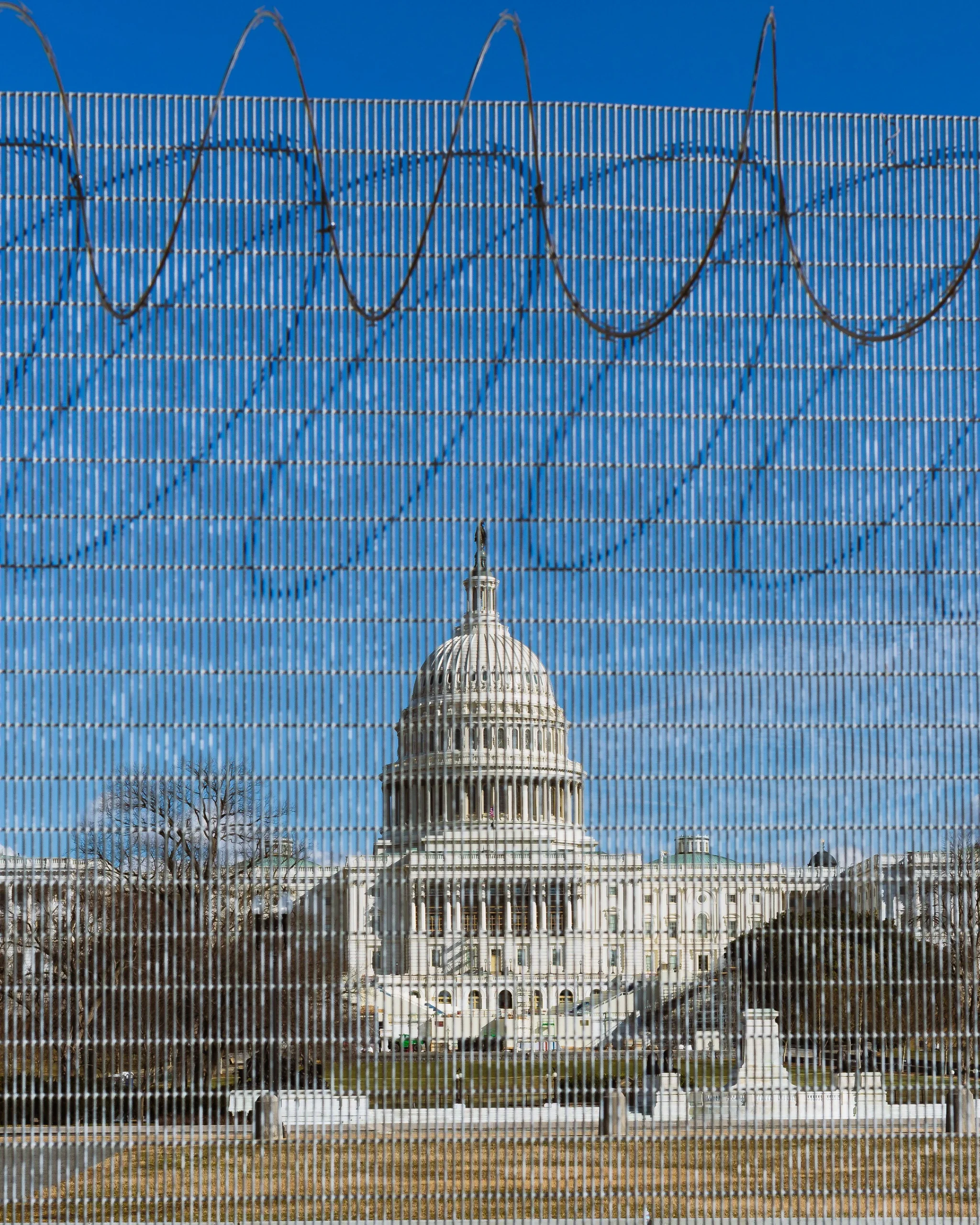
Supreme Court Decisions Are Reshaping the Power of the Presidency
The balance of power in Washington is being tested in ways that could have lasting consequences for the presidency, Congress, federal agencies and the courts. Recent Supreme Court rulings and pending cases have placed a renewed focus on one of the oldest questions in American government: how much power should the president have when carrying out the duties of the executive branch?
The issue has become especially significant during President Donald Trump’s second administration, as his White House has pursued an aggressive interpretation of presidential authority. At the same time, courts have been asked to determine whether executive actions have crossed constitutional boundaries or improperly bypassed Congress.
One of the most important developments came in June 2026, when the Supreme Court ruled in Trump v. Slaughter that the president may remove the head of an independent regulatory agency without the traditional “for cause” protection that had limited presidential removal power. The 6-3 decision overturned the legal framework established by the Court’s 1935 decision in Humphrey’s Executor v. United States.
The ruling could have consequences far beyond one federal agency. It represents a significant statement about presidential control over the executive branch and could influence how future administrations manage agencies responsible for areas ranging from financial regulation to consumer protection.
What Is the Balance of Power in Washington?
The United States government was designed around a system of checks and balances. Rather than giving all governmental authority to one institution, the Constitution divides responsibilities among three branches: the executive branch, led by the president; Congress, which makes federal laws; and the judiciary, which interprets the law and resolves constitutional disputes.
This structure is intended to prevent any single branch from becoming too powerful.
Congress can pass legislation, control federal spending and conduct oversight of the executive branch. The president is responsible for enforcing federal law and directing the executive branch. Courts can review government actions and determine whether they comply with the Constitution and federal statutes.
In practice, however, the boundaries between these powers are often complicated. Presidents need agencies and officials to carry out federal policies, while Congress frequently creates agencies with specific structures intended to provide some independence from direct presidential control.
That tension is at the heart of several major legal battles taking place in Washington.
The Supreme Court does not simply decide individual disputes. Its interpretation of the Constitution can establish rules that affect how government operates for years or even decades. That is why recent rulings concerning executive power deserve attention even from Americans who do not closely follow Supreme Court proceedings.
Trump v. Slaughter Could Strengthen Presidential Control
The Supreme Court’s decision in Trump v. Slaughter is one of the clearest examples of how the Court can change the relationship between the president and federal agencies.
The case involved Rebecca Slaughter, a commissioner of the Federal Trade Commission, and the Trump administration’s attempt to remove her from office. The legal dispute centered on whether Congress could protect an FTC commissioner from presidential removal except for specific reasons.
The Supreme Court ultimately ruled that the president must be able to remove officials exercising executive power. Chief Justice John Roberts wrote the Court’s opinion, joined by five other justices. Justices Sonia Sotomayor, Elena Kagan and Ketanji Brown Jackson dissented.
The majority emphasized Article II of the Constitution, which places executive power in the president and requires the president to ensure that federal laws are faithfully executed. The ruling rejected the idea that Congress could create executive officials who exercise significant executive authority while remaining insulated from presidential supervision.
The practical effect could be significant.
If presidents have greater authority to remove agency leaders, they may also have greater ability to ensure that federal agencies follow the administration’s policy priorities. Supporters of stronger presidential control argue that this makes government more accountable because voters can hold the president responsible for executive-branch decisions.
Critics, however, argue that independent agencies exist partly to prevent important regulatory decisions from changing dramatically whenever a new president takes office.
Why Independent Agencies Matter
Federal agencies often make decisions that directly affect Americans and businesses. The Federal Trade Commission, for example, plays an important role in competition policy and consumer protection.
Independent agencies were historically structured to provide some insulation from direct political pressure. Their leaders could not always be removed simply because a president disagreed with their decisions.
That arrangement created a degree of continuity between presidential administrations.
The Supreme Court’s decision in Trump v. Slaughter challenges that model. By allowing the president greater removal authority, the Court has moved the legal system toward a stronger version of presidential control over officials who exercise executive authority.
The Court’s official opinion specifically questioned the idea of an independent agency exercising substantial executive power without direct presidential accountability.
The change could affect how future presidents approach federal agencies. A president may have greater freedom to replace agency leaders with officials who support the administration’s agenda.
That does not mean every government agency will suddenly become directly controlled by the White House. Congress still has legislative authority, agencies still operate under federal statutes, and courts continue to review government actions.
But the decision could shift the balance inside the executive branch.
Congress Could Face a More Powerful White House
The most important question is what the ruling means for Congress.
Congress has historically used legislation to create federal agencies and establish rules governing their operation. If the president has greater constitutional authority to remove agency leaders, lawmakers may have less ability to insulate those officials from presidential influence.
That could reduce one of the tools Congress has used to create independent regulatory structures.
The Supreme Court’s ruling does not eliminate Congress’s ability to pass laws or conduct oversight. Congress can still write statutes, approve funding and investigate executive agencies. However, the Court’s interpretation of presidential removal power may limit how Congress can structure the executive branch.
This creates a potentially important shift.
Instead of federal agencies operating with substantial independence from presidential direction, future administrations may be able to exert more direct control over them. That could make the executive branch more unified, but it could also make federal policy more sensitive to presidential elections.
A change in the White House could therefore produce a faster change in regulatory policy.
The White House Ballroom Case Raises Another Separation-of-Powers Question
Another legal battle demonstrates how questions about presidential power extend beyond federal agencies.
The Supreme Court recently allowed President Trump’s $400 million White House ballroom project to continue temporarily while the justices consider the administration’s appeal. The administrative stay issued by Chief Justice John Roberts paused a lower-court restriction that had halted above-ground construction.
The case raises a different constitutional question: how much authority does a president have over federal property without congressional approval?
The Trump administration argues that the project is connected to presidential and national-security responsibilities. Opponents argue that Congress has an important role when major changes are made to federal property and that the president cannot simply bypass legislative authorization.
The Supreme Court’s temporary action is not a final decision on the underlying legal dispute. However, the case demonstrates how disputes over presidential authority increasingly involve practical questions about where executive power ends and congressional power begins.
Whatever the eventual outcome, the case could provide another important ruling on the separation of powers.
Presidential Power and Elections
The Supreme Court’s interpretation of executive authority can also influence elections.
The Trump administration has asked the Supreme Court to intervene in a dispute involving an executive order concerning mail-in voting. The administration wants restrictions on mail-ballot procedures to be enforced ahead of the 2026 midterm elections, while states challenging the order argue that election administration is largely governed by state authority and that the president exceeded his constitutional power.
Election law is particularly sensitive because the Constitution gives states significant responsibilities for administering elections while Congress also has authority over certain federal election rules.
The president’s role is more limited in this area, making disputes over executive orders especially consequential.
If the Supreme Court permits presidents to exercise broader authority in areas traditionally managed by states or Congress, future administrations could potentially use executive orders more aggressively.
If the Court instead places firm limits on presidential action, it could reinforce the principle that major policy changes require legislation or state-level authority.
The outcome of these cases could therefore influence not only the 2026 elections but also how future presidents approach election policy.
The Courts Are Becoming a Major Check on Executive Power
While some Supreme Court rulings have strengthened presidential authority, the broader legal landscape shows that the judiciary remains an important check on the executive branch.
Courts have repeatedly reviewed actions taken by the Trump administration, including disputes involving immigration, federal spending, speech, universities, government employees and executive orders.
Reuters reported in August 2026 that judges in numerous federal cases had ruled against the administration on First Amendment issues, although some lower-court decisions have been overturned or remain under appeal.
This illustrates an important part of the American system: presidential power does not operate in isolation.
Even when an administration believes it has constitutional authority to act, individuals, organizations, states and other parties can challenge those actions in court.
The Supreme Court ultimately has the authority to resolve many of the most significant constitutional disputes.
This creates an unusual dynamic in Washington. The president may attempt to expand executive authority, Congress may push back through legislation and oversight, and the courts may determine whether the actions comply with constitutional limits.
The resulting battles can continue for months or years.
What the Rulings Could Mean for Future Presidents
One of the most important aspects of Supreme Court decisions is that they do not apply only to the president who is currently in office.
A ruling that strengthens presidential power during Trump’s administration could also strengthen the authority of future Democratic or Republican presidents.
That is why the long-term implications may be more important than the immediate political consequences.
If future presidents inherit greater authority to remove agency officials, they may use that power in very different ways. A Republican president could use it to pursue conservative regulatory policies, while a Democratic president could use the same legal authority to pursue progressive priorities.
The constitutional question is therefore larger than partisan politics.
The fundamental issue is whether the executive branch should operate under stronger presidential control or whether Congress should be allowed to create independent institutions with greater protection from the White House.
The answer will shape American government regardless of which party controls Washington.
Could Congress Lose Influence?
Congress’s role could become more difficult if presidential power continues to expand.
The legislative branch depends on more than its ability to pass laws. Congress also uses oversight, appropriations and institutional structures to influence how federal policy is implemented.
If presidents gain broader authority over agency leadership, congressional efforts to create independent regulatory bodies could become less effective.
Lawmakers may respond by writing more detailed statutes, imposing funding restrictions or increasing oversight hearings. But those strategies could themselves lead to additional legal disputes.
The result could be an ongoing constitutional tug-of-war between Congress and the White House.
The Supreme Court may increasingly become the institution that settles those disputes.
What This Means for Ordinary Americans
The phrase “balance of power” can sound like an abstract constitutional concept, but these decisions can have practical consequences.
Federal agencies regulate financial markets, businesses, workplaces, consumer products, environmental standards and other areas of daily life. Changes in presidential control can therefore influence policies that affect companies and individuals.
A president with greater control over agency leadership may be able to change regulatory priorities more quickly.
For businesses, that could mean changes in enforcement or compliance expectations. For consumers, it could affect how aggressively federal agencies pursue certain forms of consumer protection. For workers, environmental groups and other organizations, changes in agency leadership could influence enforcement decisions.
The effect will depend heavily on the policies of individual administrations.
This is why Supreme Court rulings about government structure can matter even when they do not immediately create a new rule for ordinary citizens.
They determine who has the authority to make those rules.
The Supreme Court’s Role in Washington’s Future
The Supreme Court has always played a central role in defining the boundaries of American government, but its influence is especially significant during periods of intense conflict between the branches.
The Court’s 2026 ruling in Trump v. Slaughter is one example of how constitutional interpretation can reshape the structure of government. The Court’s official opinions show a clear disagreement over how presidential control should interact with the historical independence of federal agencies.
Meanwhile, other disputes involving executive orders, federal property, elections and executive authority continue to place pressure on the traditional separation of powers.
The outcome of these battles will not be determined by one ruling alone.
Instead, the balance of power in Washington will develop through a combination of Supreme Court decisions, congressional legislation, presidential actions and future elections.
A New Chapter in the Separation of Powers
The United States government was built on the idea that power should be divided and that each branch should provide a check on the others. But the boundaries between those branches have never been completely fixed.
Today’s Supreme Court rulings are helping define those boundaries for a new generation.
The decision in Trump v. Slaughter could mark an important turning point by strengthening presidential authority over officials who exercise executive power. At the same time, continuing legal challenges involving elections, federal property and executive actions show that the debate over presidential power is far from finished.
For Washington, the central question is no longer simply what a president wants to do. It is whether the president has the constitutional authority to do it without Congress, and how aggressively the courts should intervene when the branches disagree.
As more cases reach the Supreme Court, Americans will be watching not only for individual rulings but also for a larger pattern.
Will the presidency emerge with greater control over the federal government? Will Congress find new ways to reassert its authority? Or will the courts establish new boundaries between the branches?
Those questions could define the next chapter of American constitutional politics.
Citation Sources
U.S. Supreme Court — Trump v. Slaughter, 2026: Read the Supreme Court opinion
U.S. Supreme Court — 2025 Term Opinions: Supreme Court Opinions and Decisions
Reuters — Supreme Court and White House Ballroom Case: Reuters coverage
Associated Press — Supreme Court Allows Ballroom Construction to Continue Temporarily: Associated Press coverage
Reuters — Trump Administration Seeks Supreme Court Action on Mail-In Voting Rules: Reuters coverage



Leave a Reply