
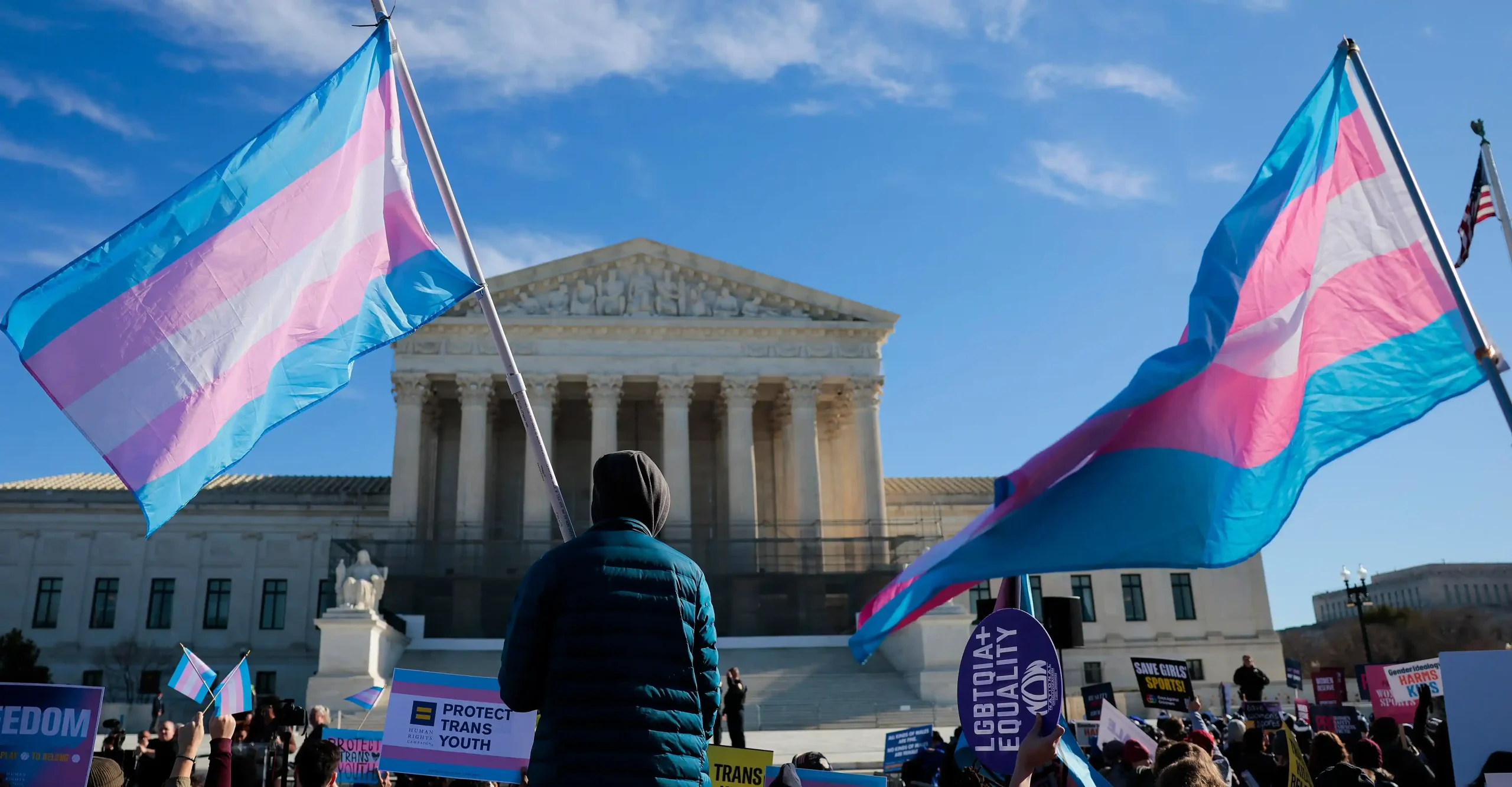
A Major Supreme Court Decision on Transgender Rights and Sports
The debate over transgender rights in sports has moved from state legislatures and school athletic associations into one of the most important areas of constitutional law. On June 30, 2026, the U.S. Supreme Court issued its decision in West Virginia v. B.P.J., together with Little v. Hecox, addressing whether states may restrict transgender girls and women from participating on girls’ and women’s school sports teams. The cases placed Title IX and the Equal Protection Clause of the Fourteenth Amendment at the center of a national debate involving youth athletics, collegiate sports, competitive fairness, safety, and transgender rights.
The Supreme Court upheld the West Virginia and Idaho laws challenged in the cases. The Court concluded that states may maintain separate athletic teams for biological males and biological females and may determine eligibility for girls’ and women’s sports based on biological sex. The decision did not establish a nationwide requirement that every state adopt the same sports policy, however. Instead, it resolved the federal constitutional and Title IX challenges brought against the specific laws before the Court.
The ruling has significant implications for transgender student athletes and for the continuing legal discussion about how equal protection applies when laws distinguish between people based on sex and transgender status.
What Was West Virginia v. B.P.J. About?
The case centered on B.P.J., a transgender girl from West Virginia who wanted to participate in girls’ school sports. West Virginia enacted the Save Women’s Sports Act in 2021. The law generally prohibited male students from participating on female sports teams and defined sex according to biological characteristics. B.P.J. challenged the law under both Title IX and the Equal Protection Clause.
The Supreme Court considered the West Virginia case alongside Little v. Hecox, a challenge to an Idaho law restricting participation in female sports. Lindsay Hecox, a transgender woman, challenged Idaho’s restrictions on transgender athletes participating in women’s sports. By considering the two cases together, the Court addressed a broader legal question concerning the authority of states to establish eligibility rules for girls’ and women’s athletics.
The cases were especially significant because they involved different stages of athletic participation. B.P.J. was a school-age student, while Hecox’s case involved collegiate athletics. As a result, the Supreme Court’s ruling has become an important reference point for discussions about transgender youth sports as well as transgender participation in college athletics.
How the Supreme Court Ruled
The Supreme Court ruled that the challenged laws did not violate either Title IX or the Equal Protection Clause. Justice Brett Kavanaugh wrote the majority opinion. The Court’s decision was supported by six justices on the central constitutional holding, although the justices differed significantly in their reasoning and in separate opinions.
The majority emphasized the physical differences between males and females that can affect athletic performance. The opinion discussed differences involving characteristics such as strength, speed, endurance, weight, height, and jumping ability. According to the majority, maintaining separate athletic categories can serve interests in competitive fairness and safety while providing opportunities for female athletes.
The Court therefore concluded that states may use biological sex as the basis for determining eligibility for girls’ and women’s sports. The majority also rejected the argument that the Constitution requires schools to conduct individual evaluations of every transgender athlete’s physical characteristics before determining eligibility.
This reasoning is central to understanding the decision. The Court did not simply say that transgender status can never be relevant under equal protection law. Rather, it considered the specific classification involved in these sports laws and concluded that the laws could survive the constitutional review applicable to sex-based classifications.
The Equal Protection Clause and Transgender Sports
The Equal Protection Clause is part of the Fourteenth Amendment and provides that states may not deny any person equal protection of the laws. In cases involving sex-based classifications, courts have traditionally applied a form of heightened scrutiny rather than the most deferential constitutional review.
That legal framework was central to the arguments in West Virginia v. B.P.J.. B.P.J. argued that West Virginia’s law improperly classified her based on sex and transgender status and that the classification was not sufficiently connected to the state’s asserted interests.
The majority reached a different conclusion. It determined that the law’s distinction between male and female athletes was substantially related to the government’s interests in athletic fairness and safety. The Court also concluded that the law was not constitutionally invalid simply because it affected transgender girls differently from other students.
The majority’s opinion also emphasized that the Equal Protection Clause does not require judges to decide whether a particular sports policy is the wisest or fairest policy. Instead, the Court’s role is to determine whether the classification violates the constitutional guarantee of equal protection. The opinion explicitly left broader policy disagreements to legislatures, schools, athletic organizations, and the democratic process.
Why the Dissent Matters
Although the Supreme Court upheld the challenged laws, the decision was not unanimous in its reasoning.
Justice Sonia Sotomayor wrote an opinion that disagreed with the majority’s equal protection analysis, joined by Justices Elena Kagan and Ketanji Brown Jackson in the relevant portions. The dissent argued that the Court should have considered more carefully whether the state’s stated reasons for excluding transgender girls actually applied to B.P.J.’s particular circumstances.
One issue raised by the dissent concerned transgender girls who have not experienced male puberty. B.P.J.’s legal team argued that her individual circumstances were relevant to the state’s claim that biological differences justified the restriction. The dissent questioned whether a categorical exclusion could be sufficiently connected to competitive fairness when the physical circumstances of individual transgender athletes can differ.
This disagreement illustrates an important constitutional question: should a law be evaluated primarily according to the general characteristics of the group being regulated, or should courts examine whether the classification makes sense for individual people affected by it?
The majority and dissent approached that question differently. The majority placed greater emphasis on the institutional and practical difficulties of evaluating individual athletes. The dissent placed greater emphasis on the individual circumstances presented by the plaintiffs.
What the Decision Means for Transgender Youth Sports
For transgender youth, the decision has particular significance because school sports can be an important part of education and student life. The Court’s ruling means that federal Title IX and Equal Protection claims cannot be used to invalidate the types of state restrictions involved in the West Virginia and Idaho cases.
However, it is important to distinguish between what the Supreme Court permitted and what it required.
The Court held that states may maintain sex-based eligibility rules for girls’ and women’s sports. It did not hold that every state must exclude transgender athletes from those teams. Legal organizations analyzing the ruling have emphasized that the decision removes a federal constitutional and statutory barrier to certain restrictions but does not itself impose a single sports policy on every state.
That distinction means the legal landscape can still differ from state to state. Some jurisdictions may continue to permit transgender students to participate according to gender identity, while others may enforce restrictions based on biological sex.
The practical result is a continuing patchwork of athletic policies across the United States.
The Impact on Collegiate Sports
The case involving Lindsay Hecox also gives the ruling significance beyond middle school and high school athletics.
College sports operate under their own combination of federal law, state law, athletic association rules, and institutional policies. The Supreme Court’s decision establishes that states can maintain eligibility restrictions based on biological sex without violating Title IX or the Equal Protection Clause in the circumstances presented by these cases.
That does not mean every college athletic program across the country automatically has identical eligibility rules. Universities may still be subject to additional state requirements, athletic association policies, and other applicable laws.
For college athletes, coaches, administrators, and families, the decision therefore becomes part of a broader legal framework rather than a single rule answering every future dispute.
Title IX Takes Center Stage
Title IX has been a central part of the debate over transgender athletes because the federal law prohibits sex discrimination in education programs receiving federal financial assistance.
The Supreme Court’s 2026 decision addressed whether excluding transgender girls and women from female athletic teams under the challenged laws violated Title IX. The Court concluded that the laws did not violate the statute.
The majority’s interpretation placed particular emphasis on the role of sex-separated athletics in providing opportunities for female athletes. The opinion described separate teams as a mechanism through which schools can preserve opportunities for women and girls in competitive sports.
The decision therefore adds an important chapter to the continuing legal history of Title IX. Since its enactment in 1972, Title IX has played a major role in expanding opportunities for women and girls in education and athletics. The current debate concerns how those protections interact with laws governing transgender participation.
Why the Case Has Become So Important
West Virginia v. B.P.J. is significant because it brings several difficult legal questions together in one dispute.
At the constitutional level, the case concerns equal protection and the treatment of sex-based classifications. At the statutory level, it concerns the meaning and application of Title IX. At the practical level, it involves athletic competition, physical differences, safety, fairness, and opportunities for students to participate in sports.
It also demonstrates how quickly a dispute involving one student can become part of a nationwide legal debate.
The Supreme Court noted that transgender sports disputes often involve teenagers and young adults who simply want to participate in athletics. At the same time, the Court recognized the concerns raised by states and organizations regarding competitive fairness and safety.
Those competing interests help explain why the issue has generated extensive litigation and legislative activity across the country.
What the Supreme Court Did Not Decide
One of the most important details of the decision is what it did not resolve.
The Court did not establish that transgender athletes are prohibited from participating in all girls’ or women’s sports nationwide. It upheld the specific state laws before it and determined that those laws could stand under Title IX and the Equal Protection Clause.
The decision also did not eliminate the possibility of states or schools adopting policies that allow transgender athletes to participate according to their gender identity. Whether such policies remain permissible can depend on other laws, regulations, and future court cases.
This distinction matters because headlines about transgender sports can sometimes make the legal consequences appear broader than the actual holding of a court decision.
The Continuing Legal Debate
The Supreme Court’s decision is unlikely to end the broader debate surrounding transgender rights and sports. Instead, it provides a significant constitutional framework for future disputes.
Questions may continue to arise over how individual states apply eligibility rules, how athletic organizations respond, how schools handle particular athletes, and how other federal or state laws interact with sports policies.
There may also be future litigation concerning situations that differ from the facts presented in B.P.J. and Hecox. Courts could be asked to consider other categories of athletics, different eligibility systems, or other laws affecting transgender students.
For families and students navigating these rules, the practical legal question may depend heavily on where they live and which athletic organization governs their competition.
A New Chapter in Transgender Rights and Sports Law
The Supreme Court’s decision in West Virginia v. B.P.J. represents a major development in the legal history of transgender rights and sports in the United States. By upholding West Virginia and Idaho’s restrictions, the Court confirmed that states may determine eligibility for girls’ and women’s sports based on biological sex under the constitutional and Title IX framework considered in these cases.
At the same time, the separate opinions show that significant disagreement remains over how equal protection should apply to transgender people and whether categorical sports restrictions adequately account for individual circumstances.
The ruling therefore does more than settle two lawsuits. It establishes a legal framework that will influence discussions involving transgender student athletes, Title IX, equal protection, state sports laws, and collegiate athletics.
For anyone following transgender rights in the United States, West Virginia v. B.P.J. is an important case to understand because it illustrates how constitutional principles, federal education law, state authority, and the realities of competitive sports can intersect in a single legal dispute.
The debate over transgender participation in sports is likely to continue, but the Supreme Court’s June 2026 decision provides a clearer understanding of what the Constitution and Title IX currently require and what questions remain for states, schools, athletic organizations, and future courts.
Citation and Reference Sources
U.S. Supreme Court, West Virginia v. B.P.J., Nos. 24-43 and 24-38, decided June 30, 2026
Read the official Supreme Court opinion
Cornell Law School Legal Information Institute, West Virginia v. B.P.J.
Read the case and Supreme Court opinion
Congressional Research Service, West Virginia v. B.P.J.: Supreme Court Upholds State Laws Restricting Eligibility of Transgender Girls to Compete in Athletics Competitions
Read the Congressional Research Service analysis
Associated Press, Supreme Court upholds state laws banning transgender girls and women from school athletic teams
Read the Associated Press coverage
The Washington Post, Supreme Court upholds bans on transgender women in female athletics
Read the Washington Post coverage
ACLU of West Virginia, Attorneys for Transgender Student-Athletes Respond to Supreme Court Ruling in BPJ and Hecox
Read the ACLU of West Virginia response
National Center for Lesbian Rights, What the Supreme Court Did Not Decide in West Virginia v. B.P.J.
Read the legal analysis



Leave a Reply