
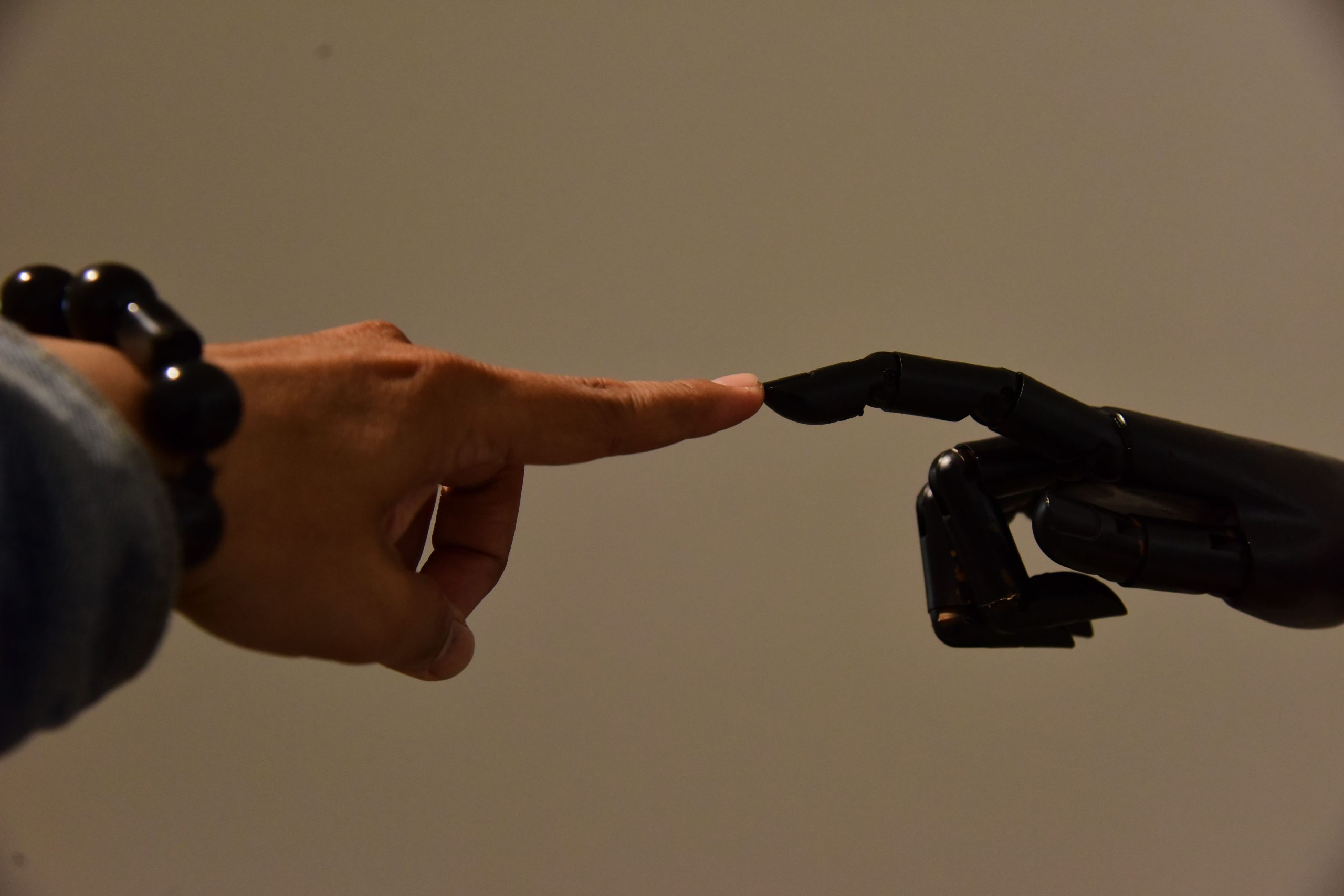
Hollywood has spent the past few years trying to understand what artificial intelligence could do to entertainment. Now the industry has another problem to solve: what the law will allow it to do.
That question is becoming increasingly important as studios, technology companies, actors, writers, filmmakers and creators move beyond theoretical discussions about AI and begin negotiating real contracts, licensing arrangements and production rules. The technology is developing quickly, but the legal system is moving on a different timetable. Copyright rules were written long before generative AI could create a convincing performance, reproduce a recognizable voice or generate an entire sequence of video from a written prompt.
That gap is where much of Hollywood’s current uncertainty lives.
The entertainment industry’s AI future is therefore not going to be determined by technology alone. It will also be shaped by contracts, copyright law, rights of publicity, labor agreements, privacy protections, state legislation and whatever federal rules eventually emerge.
And as September 2026 comes to a close, some of those rules are becoming clearer.
One of the most important developments this year has been the new SAG-AFTRA TV/Theatrical Agreement, which was ratified in June and took effect July 1. The agreement expands protections concerning artificial intelligence, digital replicas and synthetic performers. It requires producers to bargain with the union before using synthetics and establishes additional protections concerning digital replicas, biometric information, foreign-language dubbing and other uses of performers’ identities.
That matters because an actor’s relationship with AI is fundamentally different from the relationship between a studio and an ordinary piece of software.
An AI system can generate an image.
But what happens when that image looks like a real actor?
An AI system can generate a voice.
But what happens when that voice sounds like a recognizable performer?
An AI system can create a performance.
But who owns that performance, and who gave permission for it to exist?
Those questions are at the center of the legal debate.
The distinction between a digital replica and a synthetic performer is particularly important. A digital replica is designed to resemble a specific individual, while a synthetic performer can be created to resemble a person without necessarily being identifiable as a particular performer. SAG-AFTRA’s 2026 agreement addresses both categories, including requirements around consent, bargaining and the circumstances in which synthetics can be used instead of human performers.
The agreement establishes a strong preference for human performances and says producers will not use synthetics unless they provide “significant additional value” compared with a human performance or a digital replica. It also gives the union a mechanism to pursue violations through arbitration.
That is a major development because it moves the AI conversation away from broad principles and into actual employment rules.
Hollywood now has contracts that attempt to answer specific questions about what happens when a performer is scanned, digitally recreated or replaced by a synthetic representation.
But labor contracts are only part of the legal picture.
Copyright is another enormous issue.
The U.S. Copyright Office has been studying artificial intelligence since 2023, examining questions surrounding digital replicas, AI-generated material and the use of copyrighted works in AI training. Its reports make an important distinction: the use of AI does not automatically prevent a work from receiving copyright protection, but material whose expressive elements are determined entirely by a machine does not receive copyright simply because a human supplied prompts. Human creative contribution remains central.
That creates an interesting problem for entertainment companies.
Imagine a filmmaker uses AI to generate several visual concepts, selects one, substantially edits it and incorporates it into a larger film. The legal analysis may be very different from a situation in which a person enters a short prompt and accepts whatever the AI system produces.
The human contribution matters.
So does the creative process.
And that means studios and creators have an increasingly important reason to document how AI was used during production.
The question is no longer simply whether AI appeared somewhere in the workflow.
The question is what the human creators actually contributed.
That could eventually affect everything from copyright registration to litigation over ownership.
The Copyright Office’s Part 2 report, released in January 2025, concluded that AI-assisted works can still qualify for copyright where a human author determines sufficient expressive elements. It specifically noted that human-authored material incorporated into an AI output, or human creative arrangements and modifications of AI-generated material, can support copyright protection. Mere prompting, however, is not enough by itself.
For Hollywood, that creates a practical incentive to maintain a record of the creative process.
Who wrote the original material?
Who selected the AI output?
Who modified it?
Who created the final arrangement?
Who made the artistic decisions?
Those questions could become increasingly important as AI-assisted entertainment becomes more common.
Then there is the issue of training data.
An AI company needs enormous amounts of material to develop sophisticated models. Entertainment companies, meanwhile, own enormous libraries of movies, television programs, photographs, recordings, scripts and other creative works.
That creates an obvious collision.
Technology companies want access to valuable content.
Rights holders want control over how that content is used.
Creators want compensation and recognition.
And courts and lawmakers are being asked to determine where existing copyright law applies.
The U.S. Copyright Office has treated AI training as a separate issue from AI-generated output. Its ongoing work specifically examines the legal implications of training models on copyrighted works, including licensing and potential liability.
That distinction is important.
The legal question surrounding an AI-generated movie is not necessarily the same as the legal question surrounding the material used to train the AI system that generated it.
Hollywood therefore has two different copyright battles developing at once.
One concerns what AI creates.
The other concerns what AI learns from.
And both can affect the economics of entertainment.
Licensing may eventually become one of the most important pieces of the puzzle.
Instead of arguing over whether every use of copyrighted material should be allowed, technology companies and rights holders can negotiate agreements defining what can be used, for what purpose and under what financial terms.
That model is already becoming part of the broader entertainment conversation.
It is also why studios have increasingly complicated relationships with AI companies. The industry is not simply trying to stop artificial intelligence. Companies are simultaneously exploring ways to use the technology while protecting valuable intellectual property.
The result is an unusual situation in which the same company can be negotiating AI partnerships while also defending its catalog from unauthorized uses.
Hollywood wants the technology.
It also wants control over the technology’s relationship with Hollywood’s intellectual property.
That tension becomes even more complicated when individual performers are involved.
A movie studio may own certain production materials, but that does not automatically mean it has unlimited rights to recreate a performer’s identity in every possible context. Contracts, collective bargaining agreements and state publicity laws can all affect the analysis.
SAG-AFTRA’s current AI framework is built around three principles: consent, compensation and control over performers’ voices, likenesses and performances.
That language reflects a broader shift in how the entertainment industry thinks about identity.
For generations, an actor’s face and voice were tied to physical performance.
AI separates those things.
A performer can now potentially be scanned once and recreated digitally.
A voice can potentially be modeled.
A face can potentially be inserted into new material.
A performance can potentially be modified after the performer leaves the set.
The legal system therefore has to consider something that previous generations of entertainment law did not have to confront at this scale: the possibility that a person’s recognizable identity can become a reusable digital asset.
California is responding to part of that problem through new legislation.
On September 16, Governor Gavin Newsom signed SB 1050, requiring clear disclosure when advertisements use AI-generated performers and prohibiting continued use of advertisements that violate the law. The law is specifically aimed at making it clear to consumers when they are seeing synthetic performers rather than human performers.
New York has already implemented a similar disclosure requirement for advertising.
Governor Kathy Hochul announced in June that New York’s first-in-the-nation law requiring disclosure when advertisements include AI-generated synthetic performers had taken effect. The measure applies to advertising in the film and television environment and is designed to provide greater transparency about the use of synthetic performers.
The existence of different state rules creates another challenge for national entertainment companies.
Hollywood productions do not necessarily exist in one legal jurisdiction.
A commercial can be produced in one state, distributed nationally and viewed worldwide.
A streaming service can release the same piece of content to audiences across dozens of countries.
A performer can have contractual rights that cross state and international boundaries.
That means compliance can become complicated very quickly.
A studio may need to determine which disclosure requirements apply.
A production may need to track consent.
A contract may need to specify exactly how a digital replica can be used.
And an AI company may need to determine whether the material it is processing has been properly licensed.
This is why lawyers are increasingly becoming part of the AI production process rather than simply cleaning up problems after something has gone wrong.
The contract is becoming one of the most important AI tools in entertainment.
A performer agreement might specify whether an actor can be digitally scanned.
It might specify how long a replica can be stored.
It might identify the permitted uses.
It might establish compensation.
It might require notice before a new use.
It might restrict the transfer of the replica if the production company is sold.
SAG-AFTRA’s 2026 agreement includes protections concerning the secure maintenance of digital replicas and their treatment if ownership of a production changes.
That last point is especially significant in an industry experiencing constant mergers, acquisitions and restructuring.
A performer may agree to something with one company.
Years later, the company may be acquired.
The library may change hands.
The production may be sold to another distributor.
The question becomes whether the original AI permissions travel with the asset.
That is no longer an abstract legal concern.
Digital replicas are assets, and entertainment companies are increasingly treating digital assets as things that need carefully defined ownership and usage rules.
The same principle applies to voice.
Voice cloning has created a new category of legal and commercial questions because a voice can potentially be reproduced without requiring the performer to physically participate in every new performance.
SAG-AFTRA’s AI framework includes specific resources covering voice and likeness, and the union has also entered agreements with AI companies that agree to its consent, compensation and control principles. In August 2026, SAG-AFTRA announced a joint statement with Cameo and major talent agencies and organizations emphasizing protection of talent names, voices, likenesses and creative works against unauthorized AI use.
The existence of such agreements illustrates another important point.
The legal future of AI will not necessarily be created only through legislation.
It will also be created through private contracts.
Studios and unions can establish rules.
Talent agencies can negotiate protections.
Technology companies can agree to licensing conditions.
Creators can establish terms with platforms.
Those agreements can become practical guardrails while lawmakers continue debating broader legislation.
At the federal level, the U.S. Copyright Office has already recommended that Congress establish a federal right protecting individuals from the knowing distribution of unauthorized digital replicas. The Office’s 2024 report argued that existing legal protections leave gaps and recommended a federal framework with licensing, remedies and protections against unauthorized replicas, while preserving appropriate First Amendment accommodations.
That recommendation demonstrates just how broad the legal problem has become.
This is not simply a copyright issue.
A digital replica can involve publicity rights.
Privacy can matter.
Contract law can matter.
Labor law can matter.
Trademark law can matter.
Defamation law can matter.
Consumer-protection rules can matter.
And constitutional considerations can matter.
One AI-generated video can potentially raise several of these issues simultaneously.
That is why the legal language surrounding AI often sounds complicated.
The technology itself may be simple to demonstrate.
The legal ownership of what it produces is not.
Consider a hypothetical Hollywood advertisement.
A company creates an AI-generated performer who looks and sounds like a famous actor.
If the performer is clearly fictional, different rules may apply.
If the performer resembles a real person but is not intended to be that person, another question arises.
If the performer is an exact digital replica, consent and publicity rights become central.
If the advertisement uses copyrighted images to train the system, copyright questions may arise.
If the advertisement does not disclose that the performer is synthetic, consumer-protection rules may apply in jurisdictions with disclosure requirements.
And if a union performer is involved, collective bargaining provisions could become relevant.
One advertisement can therefore become a legal puzzle.
That is the environment Hollywood is entering.
The technology will continue developing faster than the law can produce a perfect universal answer.
That does not mean there will be no rules.
It means the rules will likely come from multiple sources at once.
Federal law.
State law.
Union agreements.
Individual contracts.
Platform policies.
Licensing deals.
Court decisions.
And industry standards.
For entertainment companies, that means AI governance will increasingly become part of ordinary production management.
Studios will need people who understand technology.
They will also need lawyers who understand technology.
Creators will need to understand what rights they are granting.
Actors will need to understand digital-replica provisions.
Production companies will need to know how AI tools handle uploaded material.
And technology companies will need to understand that entertainment content is not simply another data source.
It is somebody’s intellectual property.
That may ultimately be the biggest lesson of Hollywood’s AI experiment.
The technology is developing rapidly, but rights still matter.
A faster production process does not eliminate copyright.
A synthetic performer does not automatically eliminate an actor’s rights.
A digital character does not automatically belong to the company that generated it.
A prompt does not automatically make someone the copyright owner of the resulting image.
And a technology partnership does not automatically resolve every question about how creative work can be used.
Hollywood is therefore entering an era in which the lawyers may be just as important as the engineers.
The engineers are building what the technology can do.
The lawyers are helping determine what the industry can legally do with it.
And the contracts are becoming the bridge between those two worlds.
That bridge is going to get more complicated as AI becomes more capable.
The next generation of entertainment may include digital replicas, synthetic performers, AI-assisted scripts, generated visual effects, cloned voices, interactive characters and entirely new forms of media.
Whether those technologies become useful creative tools, disruptive business models or sources of litigation will depend partly on the rules established around them.
For now, Hollywood is trying to build those rules while simultaneously building the technology.
That is what makes the current moment so unusual.
The industry is not waiting for the law to finish answering every question before experimenting.
It is experimenting while the legal framework is still developing.
And that means every new AI partnership, performer agreement, licensing deal and state law could become part of the larger blueprint for entertainment’s future.
Hollywood’s AI future may eventually look very different from what anyone expects today.
But one thing is already clear: the next major entertainment technology battle will not happen only inside studios or technology labs.
It will happen in contracts, courtrooms, legislatures and negotiations over who owns the digital version of a creative performance.
The technology may create the new possibilities.
The law will determine many of the boundaries.
And Hollywood is only beginning to find out where those boundaries will be.
References
→ SAG-AFTRA — Members Approve 2026 TV/Theatrical Contracts
→ SAG-AFTRA — 2026 TV/Theatrical Contracts: AI Protections and Digital Replicas
→ SAG-AFTRA — Artificial Intelligence Resources and Policy Timeline
→ SAG-AFTRA — Statement on Protecting Performer Rights Against Unauthorized AI Use
→ U.S. Copyright Office — Copyright and Artificial Intelligence
→ U.S. Copyright Office — Part 2: Copyrightability of AI-Generated Outputs
→ U.S. Copyright Office — Part 1: Digital Replicas
→ California Governor — New Law Requires Disclosure of AI-Generated Performers in Advertising
→ New York Governor — AI-Generated Synthetic Performer Disclosure Law Takes Effect



Leave a Reply