
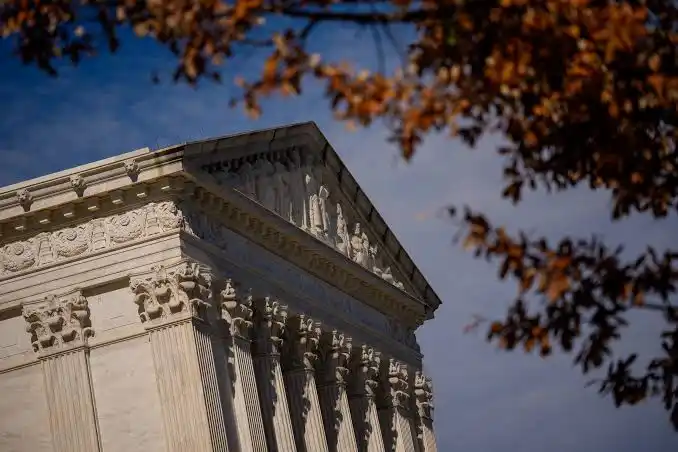
The U.S. Supreme Court is opening its 2026 term with a case that could shape the future of climate litigation across the country. On October 5, 2026, the justices are scheduled to hear oral arguments in Suncor Energy (U.S.A.) Inc. v. County Commissioners of Boulder County, a closely watched dispute involving Suncor Energy, Exxon Mobil, Boulder County, and the City of Boulder. At the center of the case is a fundamental legal question: Can state-law claims against fossil fuel companies over climate-related harms move forward, or are those claims blocked by federal law?
The case is significant because Boulder is not asking the Supreme Court to create a nationwide climate policy. Instead, the dispute concerns whether its lawsuit under Colorado law can proceed against major energy companies. Boulder alleges that the companies contributed to climate-related harm and misled the public about the risks associated with fossil fuels. Suncor and ExxonMobil argue that claims based on interstate and international greenhouse gas emissions belong under federal authority and are preempted by federal law.
The Supreme Court’s decision could have consequences well beyond Colorado. Dozens of similar climate-related lawsuits have been filed by state and local governments around the United States. The outcome in Suncor Energy v. Boulder County could therefore influence whether those cases can continue, where they can be litigated, and how governments attempt to recover costs associated with climate-related impacts.
What Is Suncor Energy v. Boulder County?
Suncor Energy v. County Commissioners of Boulder County, docket number 25-170, comes to the Supreme Court from the Colorado Supreme Court. The dispute began when Boulder County and the City of Boulder filed a lawsuit against Suncor Energy and ExxonMobil under Colorado state law.
Boulder alleges that the companies’ activities and public statements concerning fossil fuels contributed to climate-related injuries. The local governments are seeking financial compensation for damages and costs that they say are connected to climate change.
The lawsuit was originally filed in 2018, making the case part of a larger wave of climate litigation brought by state and local governments against fossil fuel companies. These lawsuits generally take a different approach from traditional federal environmental regulation. Rather than asking courts to establish nationwide emissions standards, local governments have pursued state-law claims involving issues such as public nuisance, consumer deception, and related theories of liability.
Suncor and ExxonMobil have challenged Boulder’s lawsuit, arguing that federal law prevents state courts from applying state-law liability to conduct involving greenhouse gas emissions that cross state and national borders.
The Supreme Court agreed to hear the case and specifically directed the parties to address both the substance of the preemption dispute and whether the Court has statutory and constitutional jurisdiction to hear the case.
Why Is the Supreme Court Hearing This Climate Case?
The Supreme Court has previously considered several major cases involving climate regulation. One important precedent is American Electric Power Co. v. Connecticut, decided in 2011, in which the Court addressed federal common-law claims concerning greenhouse gas emissions.
Following decisions limiting certain federal climate litigation theories, state and local governments increasingly turned to state-law claims. The Boulder case represents an important test of whether that strategy can continue.
The legal distinction matters. Boulder maintains that it is pursuing traditional state-law claims seeking compensation for local injuries. Suncor and ExxonMobil contend that the lawsuit effectively attempts to regulate conduct involving global greenhouse gas emissions and therefore intrudes into an area requiring federal control.
The Congressional Research Service described the case as a major test of whether state-law climate tort suits can proceed against fossil fuel companies. According to its September 2026 analysis, the dispute raises questions involving federal preemption, constitutional structure, foreign affairs, interstate emissions, and the Clean Air Act.
That combination makes Suncor Energy v. Boulder County one of the most closely watched cases at the beginning of the Supreme Court’s new term.
What Does Boulder County Argue?
Boulder County and the City of Boulder argue that their lawsuit is based on state law and falls within traditional state authority. Their position is that the Clean Air Act does not automatically eliminate state-law claims seeking compensation for local injuries.
Boulder also argues that federal common law does not prevent its claims from moving forward. According to the Supreme Court case summary, Boulder maintains that federal common law concerning interstate pollution has been displaced by federal legislation and that the Clean Air Act does not preempt the claims at issue.
The local governments also challenge whether Suncor has established a sufficient basis for Supreme Court review at this stage. This adds another layer to the case because the justices could potentially resolve the dispute on jurisdictional grounds rather than reaching every major question concerning climate liability.
For Boulder, the distinction between regulating emissions and seeking compensation is central. The local governments are seeking damages for alleged injuries rather than asking the Supreme Court to establish a national emissions standard.
That argument reflects a broader legal strategy being used by several state and local governments across the country. Instead of asking courts to determine national climate policy, these governments argue that traditional state tort law can provide a mechanism for recovering costs associated with alleged climate-related injuries.
What Do Suncor Energy and ExxonMobil Argue?
Suncor and ExxonMobil take a fundamentally different position. They argue that Boulder’s claims concern greenhouse gas emissions that occur across state and international boundaries and therefore cannot properly be treated as an ordinary state-law dispute.
The companies argue that the Constitution, federal law, and the Clean Air Act limit the ability of individual states to impose liability for conduct connected to a global emissions system.
One of their central arguments is federal preemption. In simple terms, preemption occurs when federal law takes priority over state law in a particular area. Suncor and ExxonMobil contend that climate change and interstate greenhouse gas emissions require a nationally consistent federal framework rather than separate liability rules imposed by individual states and local governments.
The companies also raise arguments concerning the constitutional structure of the federal government and the limits of state authority over conduct occurring outside a state’s borders.
Their concern extends beyond Boulder itself. If state and local governments can use state tort law to seek damages for global climate effects, the energy companies argue, businesses could face different legal standards and potentially large financial claims in jurisdictions across the country.
The companies have therefore asked the Supreme Court to prevent Boulder’s case from moving forward.
The Clean Air Act and the Central Legal Question
The Clean Air Act is one of the most important pieces of federal environmental legislation involved in the dispute.
The energy companies argue that the federal regulatory framework established by the Clean Air Act preempts Boulder’s state-law claims. Their position is that greenhouse gas emissions crossing state and international borders are fundamentally a matter of federal concern.
Boulder disputes that interpretation. The local governments argue that the Clean Air Act does not eliminate traditional state-law remedies for injuries allegedly caused by corporate conduct.
This disagreement puts federalism at the heart of the case.
Federalism divides governmental authority between the federal government and the states. In environmental law, that balance can become particularly complicated because pollution and emissions frequently cross state boundaries.
A factory can operate in one state while pollution affects another. Greenhouse gases are even more difficult because emissions mix throughout the global atmosphere. The Supreme Court therefore faces a question that extends beyond climate policy: How should American law divide responsibility between federal and state governments when the alleged harm is inherently interstate and international?
Why the Case Could Affect Dozens of Other Lawsuits
One reason Suncor Energy v. Boulder County has attracted so much attention is that Boulder is not alone.
State and local governments have filed dozens of lawsuits against fossil fuel companies using state-law theories related to climate change. The Congressional Research Service reported that nearly 200 members of Congress and more than 40 states have filed or joined amicus briefs supporting different positions in the case.
Reuters has reported that the outcome could affect nearly 60 similar lawsuits nationwide involving other major energy companies.
If the Supreme Court rules that federal law prevents Boulder’s lawsuit from proceeding, energy companies could gain a significant defense against a large category of state-law climate cases.
If the Court allows the case to proceed, it would not necessarily mean that Boulder automatically wins its lawsuit or that Suncor and ExxonMobil will ultimately be found liable. Instead, the case would continue in state court, where the parties would still have to litigate the underlying allegations.
That distinction is important. The Supreme Court is being asked primarily to decide whether the legal pathway remains open, not to determine the ultimate factual responsibility for climate change in Boulder.
The Marshall Fire and Local Climate-Related Costs
Boulder’s lawsuit has gained additional attention because the region has experienced severe climate-related events, including the 2021 Marshall Fire.
The Marshall Fire became one of Colorado’s most destructive wildfires, causing billions of dollars in estimated damage. Boulder and surrounding communities have also faced costs associated with preparing for and responding to environmental risks.
Boulder argues that fossil fuel companies should bear financial responsibility for certain climate-related costs. Suncor and ExxonMobil dispute the legal basis for those claims and deny that state-law litigation is the appropriate mechanism for addressing a global problem.
The factual circumstances surrounding local climate damage make the case especially significant for communities that are spending substantial amounts on adaptation, infrastructure, emergency response, and other climate-related expenses.
At the same time, the companies argue that determining responsibility for global climate effects through individual state lawsuits could create unpredictable and potentially conflicting legal obligations.
Justice Alito’s Recusal Adds Another Complication
The Supreme Court will hear the case with eight participating justices rather than the usual nine. Justice Samuel Alito has recused himself from Suncor Energy v. Boulder County. The Congressional Research Service noted that the recusal was announced on September 28, 2026.
A smaller participating bench can add uncertainty to a closely divided case because an evenly split decision can leave the lower court’s judgment in place without establishing a nationwide Supreme Court precedent.
The possibility is particularly relevant in a case involving a major constitutional and federalism dispute. However, the eventual outcome cannot be predicted simply from the composition of the Court or the recusal.
The justices could also resolve the case on jurisdictional grounds without reaching all of the underlying preemption questions.
What Happens After Oral Arguments?
Oral arguments in Suncor Energy v. Boulder County are scheduled for October 5, 2026, at the beginning of the Supreme Court’s new term. The official Supreme Court docket confirms that the case has been set for argument on that date.
After oral arguments, the justices will consider the parties’ legal arguments and the extensive collection of briefs filed by states, organizations, lawmakers, industry groups, and other interested parties.
The Court’s eventual decision could arrive during the 2026-2027 term.
Until then, it is important to distinguish between the arguments presented to the Court and an actual ruling. The Supreme Court has not yet determined whether Boulder can ultimately hold Suncor or ExxonMobil liable for the climate-related damages alleged in its lawsuit.
The immediate legal question is whether Boulder’s state-law claims are preempted or otherwise barred and whether the Supreme Court has jurisdiction to decide the dispute.
Why Suncor Energy v. Boulder County Matters
Suncor Energy v. Boulder County could become an important case in the history of climate litigation in the United States because it sits at the intersection of environmental law, constitutional law, federalism, corporate liability, and state authority.
For Boulder, the case represents an effort to use state law to seek compensation for alleged local consequences of climate change. For Suncor and ExxonMobil, the case represents a challenge to what they view as an attempt to impose state-level liability on conduct connected to a global emissions system.
The Supreme Court’s ruling could determine whether similar climate lawsuits are able to proceed under state law or whether federal law places significant limits on that litigation strategy.
The case also raises a broader question about how the American legal system should handle problems that cross borders. Climate change does not stop at state lines, but the United States remains a federal system in which states retain substantial authority over traditional areas of law.
That tension is what makes Suncor Energy v. Boulder County more than another environmental dispute. It is a case about where legal authority begins, where it ends, and which level of government should determine the rules when local harm is connected to a global phenomenon.
Final Thoughts
The Supreme Court’s opening of the 2026 term with Suncor Energy v. Boulder County puts climate liability and federalism at the center of national legal attention.
The case does not ask the justices to determine whether climate change exists or to establish a national climate policy. Instead, the Court must consider whether Boulder can pursue state-law claims against major fossil fuel companies for alleged climate-related injuries and whether federal law prevents those claims from moving forward.
The answer could have consequences far beyond Colorado. With dozens of similar lawsuits pending around the country, the Supreme Court’s decision may influence how state and local governments pursue climate-related claims, how energy companies defend themselves against those lawsuits, and how courts approach the boundary between state authority and federal environmental law.
For now, the legal battle begins with oral arguments. The questions raised in Suncor Energy v. Boulder County will likely remain closely watched throughout the Supreme Court’s 2026 term as the justices consider one of the most consequential climate-liability disputes to reach the nation’s highest court.
Sources and References
U.S. Supreme Court, Suncor Energy (U.S.A.) Inc. v. County Commissioners of Boulder County, No. 25-170. The official docket provides the case history, questions presented, filings, and October 5, 2026 argument date. U.S. Supreme Court docket
Legal Information Institute, Cornell Law School, Suncor Energy Inc. v. County Commissioners of Boulder County. Provides an overview of the legal issues involving federal preemption, the Clean Air Act, standing, and climate change. Cornell Law School case overview
Congressional Research Service, State-Law Climate Tort Suits and Suncor Energy (U.S.A.) Inc. v. County Commissioners of Boulder County: A Primer for Congress. Provides background on climate tort litigation and the legal arguments before the Supreme Court. Congressional Research Service report
Reuters, “US Supreme Court to kick off term with bid by Big Oil to toss climate suits.” Provides current reporting on the case, the parties’ positions, and the potential impact on similar litigation nationwide. Reuters report
Associated Press, “The Supreme Court will hear a major climate change case involving a devastating Colorado wildfire.” Provides background on the Marshall Fire and the climate-related damages at issue in the Boulder litigation. Associated Press report



Leave a Reply