
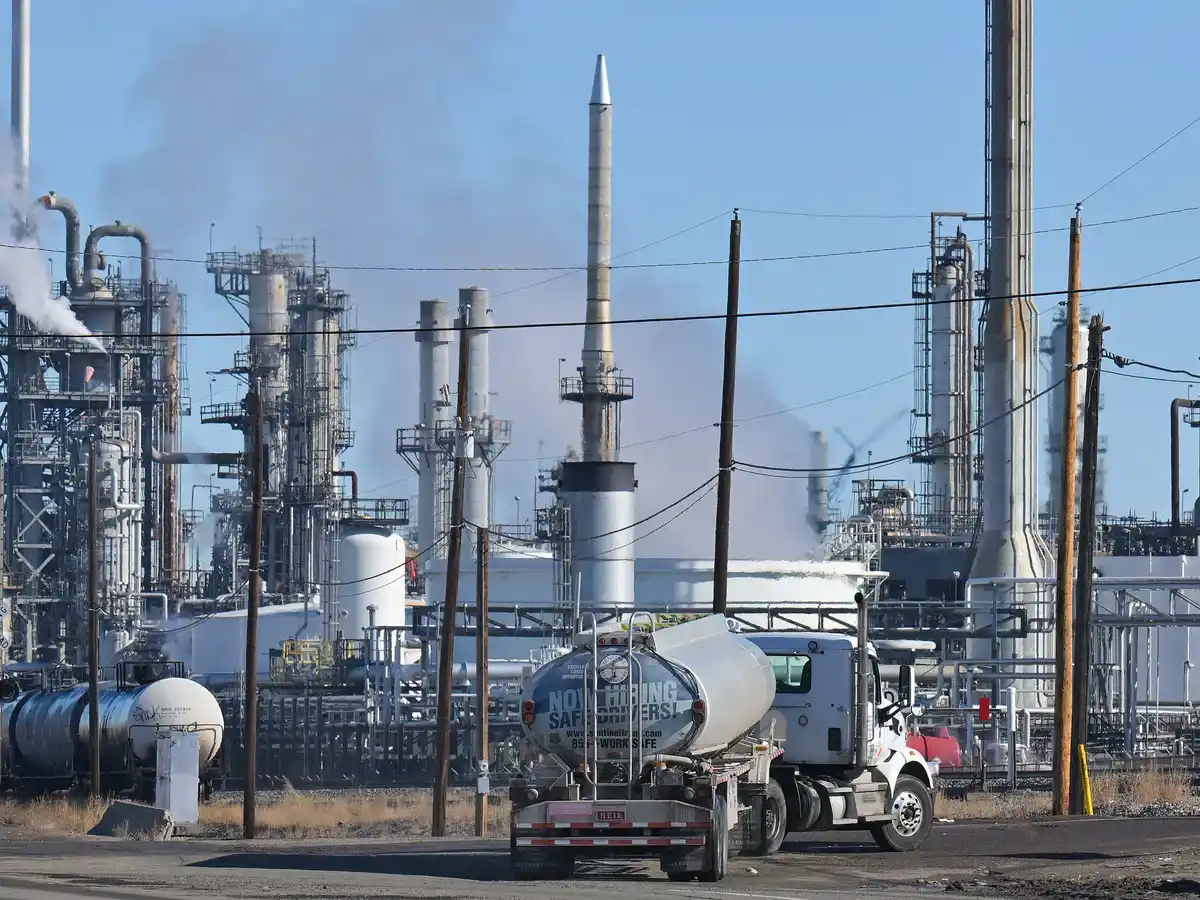
Introduction: A Landmark Legal Battle Over Climate Accountability
The fight over climate change is no longer confined to environmental policy, scientific research, and international agreements. It is increasingly taking place in courtrooms, where local governments are asking a fundamental question: Should major fossil fuel companies face financial liability for the damage communities say has been caused by climate change?
At the center of this debate is Suncor Energy (U.S.A.) Inc. v. County Commissioners of Boulder County, a closely watched case before the United States Supreme Court. The dispute involves ExxonMobil, Suncor Energy, the City of Boulder, and Boulder County in Colorado. Local officials are seeking to hold the energy companies accountable under state law for alleged climate-related harm and the costs of protecting their communities.
The companies argue that climate change is a global issue that must be addressed through federal law and national policy, rather than through lawsuits based on individual states’ legal systems. Boulder, meanwhile, maintains that it should have the opportunity to pursue compensation for local injuries allegedly connected to the companies’ conduct.
The Supreme Court heard oral arguments on October 5, 2026, opening its new term with a case that could influence dozens of similar lawsuits across the United States. As of October 19, 2026, the Court has not issued its decision. The eventual ruling could help determine how far state and local governments can go in pursuing climate change liability claims against the fossil fuel industry.
For legal observers, business leaders, environmental advocates, and policymakers, the case raises questions that extend beyond two energy companies and one Colorado community. It concerns federal authority, state law, corporate responsibility, and the role of courts in addressing the financial consequences of climate change.
Understanding the Suncor Energy v. Boulder County Case
The dispute began in 2018, when the City of Boulder and Boulder County filed a lawsuit against Suncor Energy and ExxonMobil. The local governments alleged that the companies’ production, promotion, refining, marketing, and sale of fossil fuels contributed to climate change and that the resulting impacts caused harm within their jurisdiction.
According to Boulder, the companies’ conduct included misleading the public about the risks associated with fossil fuels. The local governments contend that these actions helped sustain the use of products that contribute to greenhouse gas emissions, worsening climate-related problems and increasing the costs of protecting local residents and infrastructure.
The lawsuit seeks monetary compensation for alleged damages associated with climate change. These may include expenses related to preparing for and responding to climate-related impacts, as well as protecting public property and community infrastructure.
The companies dispute the legal basis for the lawsuit. They argue that the claims concern greenhouse gas emissions and climate effects that cross state and national borders. Because emissions contribute to a worldwide environmental problem, they contend that the dispute should be governed by federal law rather than state-law claims that could impose different obligations in different jurisdictions.
An important distinction is that the Supreme Court is not currently deciding whether ExxonMobil or Suncor is ultimately liable for the damages Boulder alleges. The central questions concern whether federal law prevents the lawsuit from proceeding under state law and whether the Supreme Court has authority to review the dispute at this stage.
That distinction matters. Even if Boulder is permitted to continue its case, it would still need to establish its legal claims and prove the elements required for a successful lawsuit.
The Core Legal Question: Can State Law Govern Global Climate Harms?
The central legal issue is whether federal law preempts Boulder’s state-law claims. In legal terms, preemption occurs when federal law takes priority over state law in a way that prevents a state rule or claim from operating.
ExxonMobil and Suncor argue that the Constitution and federal environmental law limit the ability of individual states to impose liability for climate change connected to greenhouse gas emissions across the country and around the world. They rely in part on the Clean Air Act, the constitutional structure governing relations between states, and concerns about foreign affairs.
The companies warn that allowing local governments to pursue these cases could produce conflicting legal standards. One state or municipality might reach a different conclusion from another about the conduct of a company operating across multiple jurisdictions. Businesses could face lawsuits seeking substantial damages based on the cumulative effects of global emissions, even though no single company controls the entire climate system.
Boulder presents a different interpretation. The local governments argue that their lawsuit seeks compensation for alleged injuries within Colorado, rather than an order requiring companies to comply with a new emissions limit. They maintain that traditional state-law claims can address harm to local communities and that the Clean Air Act does not automatically eliminate every state-law remedy involving climate-related damage.
The distinction between regulating emissions and seeking compensation is crucial. If a lawsuit is treated as an indirect attempt to control nationwide or global emissions, federal law may present a significant obstacle. If it is considered a conventional legal claim for local injuries caused by alleged misconduct, Boulder argues that it should be allowed to proceed.
The Supreme Court’s analysis could clarify how courts should draw that line in future climate litigation.
The Business Argument: Why Energy Companies Oppose Climate Liability Lawsuits
From the perspective of the energy industry, the outcome could influence the legal and financial risks associated with producing and selling fossil fuels.
Companies opposing these lawsuits argue that climate change involves a complex global system shaped by emissions from many sources, energy demand, industrial development, transportation, electricity generation, and consumer activity. They contend that assigning liability through separate state lawsuits could impose unpredictable costs on individual producers for a problem that crosses national borders.
One major concern is the possibility of inconsistent judgments. If numerous cities, counties, and states bring similar claims, companies could be required to defend themselves in different courts under varying legal standards. A ruling allowing such lawsuits to advance could encourage additional claims and create prolonged litigation for businesses throughout the energy sector.
Companies and their supporters also argue that decisions about energy production, emissions reduction, and climate policy should be made through federal legislation, environmental regulation, and other coordinated policymaking processes. They contend that courts should not allow individual local governments to establish, through damages awards, rules with consequences extending far beyond their borders.
Financial exposure is another consideration. Large damage awards or settlement obligations could affect business planning, investment decisions, insurance costs, and the price of energy. Industry advocates warn that legal uncertainty could discourage investment or shift costs to consumers.
These arguments raise legitimate questions about consistency, predictability, and the proper role of the judiciary. However, they do not independently establish that the companies are legally immune from climate-related claims. That is precisely the issue the Court must examine under the relevant constitutional provisions, federal statutes, and precedents.
The business community is therefore watching the case closely, not only for its immediate effect on ExxonMobil and Suncor but also for what it may mean for corporate litigation risk across the country.
The Environmental Argument: Why Local Governments Want Their Day in Court
Supporters of Boulder’s lawsuit emphasize that climate change can impose tangible costs on individual communities. Local governments may need to invest in infrastructure improvements, emergency planning, water management, wildfire preparation, and other protective measures as environmental risks change.
These expenses can affect municipal budgets and, ultimately, taxpayers. Communities may face difficult decisions about whether to increase spending, postpone other public projects, raise revenue, or redirect funds toward climate adaptation.
From this perspective, a lawsuit is a way to seek financial relief for injuries that local governments allege were caused in part by corporate conduct. Boulder argues that it should not automatically lose access to established state-law remedies simply because the alleged harm is connected to a global problem.
Environmental advocates also point to allegations that some fossil fuel companies knew about climate risks while publicly downplaying or misrepresenting them. Such allegations remain matters to be established through appropriate legal proceedings, rather than assumptions that can substitute for evidence.
For supporters of climate liability litigation, the ability to investigate these claims through discovery and present evidence in court is important. They argue that allowing lawsuits to proceed does not automatically mean companies will be found liable. It means plaintiffs can attempt to prove their claims under the applicable law.
The issue also concerns how the financial burden of climate-related damage should be distributed. If communities must absorb all costs associated with protecting public infrastructure, taxpayers may carry the burden. If a court ultimately finds a company liable, compensation could shift some of those costs to that defendant.
Nevertheless, causation and the calculation of damages are complex questions. Plaintiffs must establish legally sufficient connections between the conduct alleged and the harm for which they seek compensation. The fact that climate change creates public costs does not, by itself, resolve who should pay for them.
The Clean Air Act and the Limits of Federal Authority
The Clean Air Act is central to the dispute because it establishes a federal framework for controlling air pollution. The energy companies argue that the national and international dimensions of greenhouse gas emissions make federal law controlling and prevent Colorado from using state law to impose liability for the alleged consequences of those emissions.
The companies also raise constitutional concerns about states applying their laws to conduct occurring outside their borders. Because greenhouse gases mix in the atmosphere and climate effects are not confined to one jurisdiction, they argue that allowing state courts to decide these claims could interfere with national energy policy and international relations.
Boulder counters that federal regulation of emissions does not necessarily eliminate state-law claims seeking compensation for allegedly wrongful conduct. Its position distinguishes between regulating the amount of pollution a company may emit and seeking damages for injuries allegedly caused by the company’s actions.
The Colorado Supreme Court ruled in May 2025 that federal law did not preempt Boulder’s claims at that stage. The decision allowed the lawsuit to continue in state court, without determining whether the local governments would ultimately succeed on the merits. ExxonMobil and Suncor subsequently sought review by the U.S. Supreme Court, which agreed to hear the case in February 2026.
The current proceedings therefore involve important questions about the relationship between federal environmental regulation and traditional state-law claims. The Court must consider whether the legal framework permits Boulder’s case to move forward, not whether climate policy should be designed around one preferred political or economic outcome.
What Happened During the Supreme Court’s October 2026 Arguments?
The Supreme Court heard oral arguments on October 5, 2026. The justices explored whether Boulder’s lawsuit should be understood as a traditional state-law action seeking compensation for local injuries or as an attempt to regulate the consequences of worldwide greenhouse gas emissions through Colorado law.
Questions during the hearing reflected concerns about the boundaries of state authority, the potential scope of future lawsuits, and whether the case was procedurally ready for the Supreme Court to resolve.
Chief Justice John Roberts questioned the distinction between seeking compensation and attempting to reduce emissions through litigation. Other justices examined the relationship between the claims and existing federal law, including whether the dispute had reached a stage at which the Court should decide the issues presented.
These questions do not establish how the justices will ultimately vote. Oral arguments are an opportunity for the Court to test legal positions, explore difficult hypotheticals, and examine the consequences of competing interpretations.
Justice Samuel Alito did not participate in the case after recusing himself. His absence means that only eight justices are participating, raising the possibility of a four-to-four split. Such a split would leave the Colorado Supreme Court’s judgment in place but would not establish a nationwide Supreme Court precedent resolving the broader legal questions.
As of October 19, the case remains undecided. A final opinion is expected later in the Court’s term, which runs into 2027.
How the Decision Could Affect Other Climate Lawsuits
The importance of Suncor Energy v. Boulder County extends well beyond Colorado. State and local governments across the United States have filed similar lawsuits against fossil fuel companies, alleging that corporate conduct contributed to climate-related injuries and that the plaintiffs are entitled to compensation under state law.
A ruling favorable to the energy companies could make it more difficult for local governments to pursue certain climate-related damages claims under state law. Depending on the Court’s reasoning, lower courts might dismiss cases or limit the circumstances in which these lawsuits can proceed.
Such a decision would not necessarily eliminate every form of climate litigation. Cases involving different statutes, defendants, legal theories, or factual circumstances could raise distinct questions. The precise wording of the Court’s opinion would matter.
A ruling favoring Boulder, by contrast, could preserve a pathway for similar claims to continue in state courts. It would not automatically establish liability against the companies or guarantee that other municipalities would prevail. Plaintiffs would still need to meet the legal and evidentiary requirements of their individual cases.
The decision could also influence negotiations between local governments and companies. If the legal barriers to litigation are narrowed, some defendants might face stronger incentives to consider settlements. If the Court limits these lawsuits, municipalities may have to rely more heavily on legislation, administrative regulation, public funding, and other legal mechanisms.
The case may ultimately determine not only how climate claims are litigated but also which institutions are permitted to address disputes over the costs of climate change.
What the Case Means for Corporate Accountability
At a broader level, the dispute reflects a growing debate about the relationship between corporate activity and public costs. Companies routinely make decisions that influence consumers, communities, markets, and the environment. The law determines when those decisions create liability and which courts have authority to evaluate the resulting claims.
For businesses, a predictable legal framework is essential. Companies need to understand the rules governing their operations and the circumstances in which they can be held financially responsible. Unclear or conflicting requirements can make investment and long-term planning more difficult.
For communities, access to legal remedies can also be important. Local governments may argue that when they suffer measurable injuries, they should be able to present evidence and seek compensation through recognized legal channels.
Neither concern automatically overrides the other. The question is how existing law balances the authority of federal institutions, the traditional responsibilities of states, and the rights of parties seeking judicial relief.
The Supreme Court’s ruling could help define that balance. It could clarify whether these climate-related claims fall within the scope of state-law remedies or whether federal law places limits on how local governments may pursue them.
The decision may also shape how companies evaluate litigation exposure, how municipal governments plan for future costs, and how lawmakers approach the relationship between environmental regulation and financial accountability.
Conclusion: A Defining Moment for Climate Change Liability
Suncor Energy (U.S.A.) Inc. v. County Commissioners of Boulder County is a major test of the legal boundaries surrounding climate change liability in the United States. The dispute places the interests of local communities, major energy companies, and federal policymakers in direct conversation over a difficult question: Who has the authority to determine whether fossil fuel producers can be held financially responsible for alleged climate-related harm?
The energy companies argue that global greenhouse gas emissions require a coordinated federal approach and that state-law lawsuits risk inconsistent rules and excessive liability. Boulder argues that it should be allowed to seek compensation for local injuries under established state law, particularly when it alleges that companies misled the public about climate risks.
The Supreme Court’s decision will not resolve every scientific, economic, or political question surrounding climate change. Nor will it automatically determine whether ExxonMobil or Suncor owes damages to Boulder. Instead, the ruling will address important legal questions about federal preemption, state authority, and the ability of local governments to pursue their claims.
With oral arguments completed and a decision still pending, the case remains one of the most consequential legal disputes of the 2026–2027 Supreme Court term. Its outcome could reshape the landscape of climate litigation and influence how businesses and communities approach corporate accountability for years to come.
For legal analysts and business observers, the central question is no longer simply whether climate change creates costs. It is whether, and through which legal system, those costs can be attributed to particular companies and recovered in court.
Sources
Reuters: Facing climate lawsuits, Big Oil again turns to US Supreme Court
Reuters: U.S. Supreme Court wrestles with oil companies’ bid to scuttle climate lawsuit


Leave a Reply