
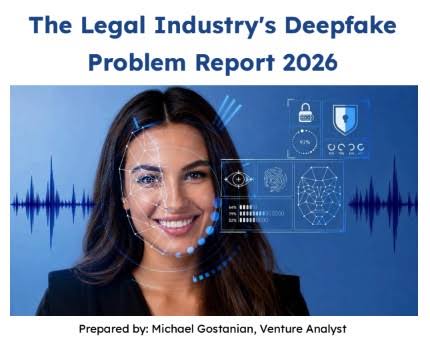
A video appears to show a company executive making a damaging admission. An audio recording seems to capture a suspect discussing a crime. A security camera clip appears to place someone at the scene of an incident.
For years, recordings like these have played an important role in investigations, courtroom disputes, and public reporting. Although digital evidence has never been infallible, it can provide a powerful way to reconstruct events and evaluate competing accounts.
Artificial intelligence is making that process more complicated.
Today’s generative AI tools can produce convincing images, imitate voices, alter facial expressions, and create videos depicting events that never occurred. Other tools can manipulate authentic recordings, changing their meaning without making every alteration immediately obvious.
The result is a growing legal challenge: how can courts distinguish authentic evidence from convincing fabrication without dismissing genuine evidence simply because it could have been manipulated?
The question is receiving renewed attention across the American legal system. In October 2026, experts including representatives from OpenAI and Meta discussed the difficulty of distinguishing AI-generated audio and video from authentic material before a U.S. judicial advisory panel. The discussion underscored a difficult reality: neither human inspection nor automated detection can guarantee that a recording is genuine.
The issue is bigger than technology. It reaches the foundations of evidence law, the responsibilities of attorneys, the work of journalists, and the ability of investigators to establish facts.
The Deepfake Problem: When Fabrication Looks Convincing
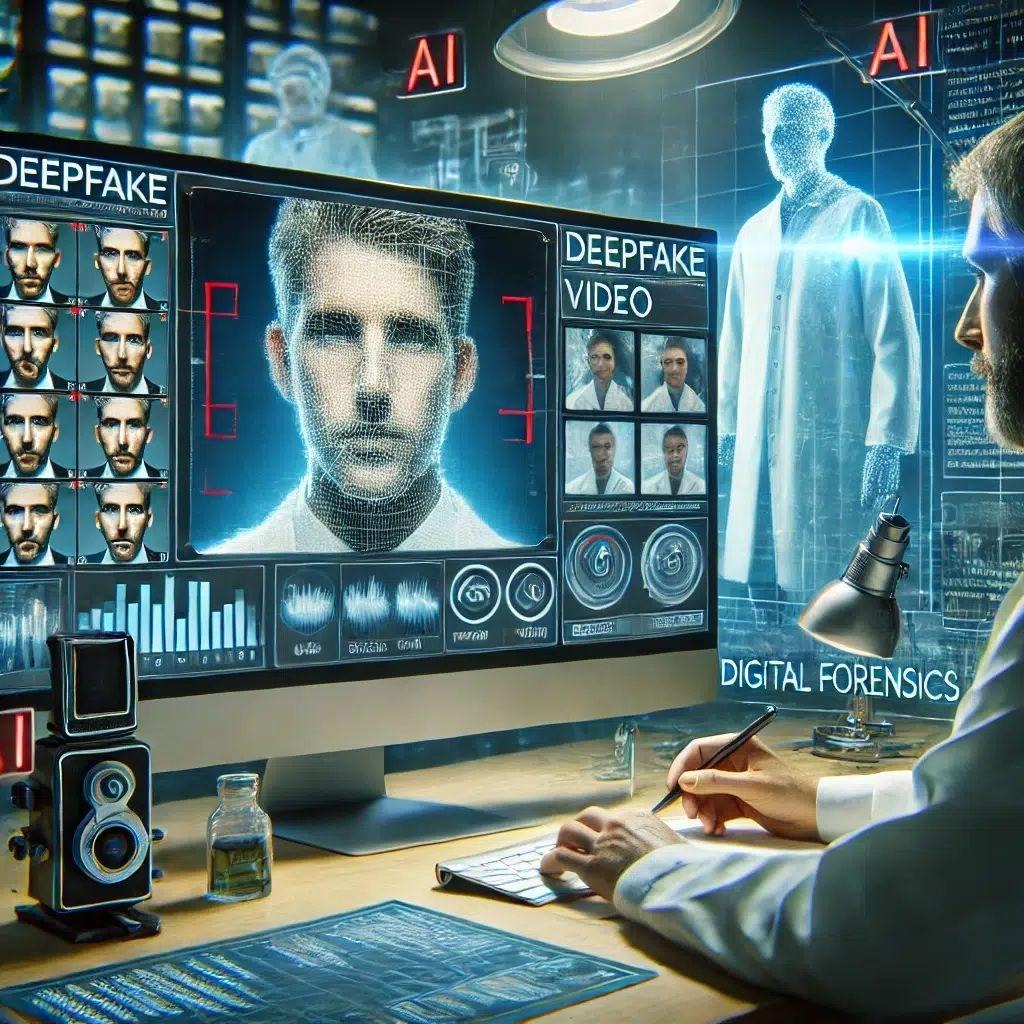
A deepfake is synthetic or manipulated media created with AI techniques to make a person appear to say or do something they did not actually say or do.
Some deepfakes replace a person’s face in a video. Others reproduce a voice from audio samples, generate entirely synthetic speech, or combine authentic footage with fabricated material.
The technology has legitimate applications. Filmmakers can use synthetic media for visual effects, accessibility tools can generate speech, and researchers can create simulations for education and training.
The legal problem arises when generated or manipulated content is presented as an authentic record of real events.
Imagine a dispute involving an alleged threat. One party submits an audio recording that appears to contain the other person’s voice. The speaker denies making the statement and argues that the recording was generated or altered using AI.
The court must now consider more than what the recording appears to show. It must examine where the file originated, whether it has been altered, how it was preserved, and what evidence supports the claim that the speaker actually made the statement.
Even a convincing recording may leave important questions unanswered.
Was the file captured directly from a device? Has it been edited? Is the voice genuine? Does the surrounding conversation support the interpretation being offered? Can the original recording be located and independently examined?
These questions are not entirely new. Digital files have long been edited, compressed, copied, and manipulated. What has changed is the accessibility and sophistication of tools capable of producing realistic synthetic media.
Fabrication that once required specialist equipment and considerable technical expertise can now be attempted with widely available software.
That does not mean every recording is suspect. It means authenticity may require more careful examination when there is a concrete reason to question it.
Why Federal Evidence Rules Matter
In American federal courts, digital evidence generally must satisfy the same basic evidentiary requirements as other evidence. There is no universal rule that automatically makes a video admissible simply because it appears realistic, nor is every AI-related recording automatically excluded.
Federal Rule of Evidence 901 addresses authentication.
Under Rule 901(a), the party offering an item must produce evidence sufficient to support a finding that the item is what the party claims it to be. Depending on the circumstances, authentication may involve a witness who knows how the recording was created, testimony from someone familiar with a speaker’s voice, comparison with authenticated material, or other evidence connecting the file to the events in question.
Other rules also matter. Rule 401 addresses relevance, Rule 403 allows courts to exclude relevant evidence when its probative value is substantially outweighed by specified risks such as unfair prejudice or misleading the jury, and Rule 702 governs the admissibility of expert testimony.
These requirements serve different purposes. A recording might be relevant but insufficiently authenticated. A technically authentic recording might still be misleading when presented without context. An expert’s conclusions about a file may also be challenged if the methods used to reach them are unreliable.
The rise of deepfakes has intensified debate over whether existing rules provide sufficient protection against sophisticated fabrication.
The Federal Rules of Evidence apply in federal proceedings, while state courts operate under their own evidence rules, which may resemble the federal framework but differ in important respects. Lawyers must therefore consider the law governing the specific case rather than assume that one nationwide procedure applies everywhere.
The Federal Rules Debate Is Still Developing
The United States has been considering whether its evidence rules need more explicit provisions addressing AI-generated material.
Two proposals have received particular attention.
Proposed Rule 901(c) would have addressed challenges to audio or video evidence alleged to be fabricated or altered using AI. The proposal contemplated a process under which a sufficiently supported authenticity challenge could shift the burden to the party offering the evidence to establish its authenticity under a more demanding standard.
Proposed Rule 707 addressed a different issue: AI-generated output offered as evidence without an expert witness. It would apply standards similar to those governing expert testimony under Rule 702, requiring scrutiny of the reliability of the underlying methods and their application.
The distinction is important. A deepfake presented as a genuine recording creates an authenticity problem. An AI system that generates an analysis, prediction, or other output creates questions about methodological reliability.
In May 2026, the federal evidence advisory process postponed action on the proposals amid disagreement about their wording, necessity, and implications. The issue received further attention at the committee’s October 2026 meeting.
As of October 26, 2026, the proposed amendments should not be described as adopted federal rules. The committee’s continuing review reflects an unresolved question about how best to address AI-related evidence risks while preserving workable procedures for ordinary cases.
Some legal professionals argue that explicit rules would provide clearer procedures when sophisticated fabrication is alleged. Others caution that existing evidence rules already give judges tools to evaluate authenticity and that poorly designed amendments could create unnecessary disputes or encourage parties to challenge genuine recordings without adequate grounds.
The debate illustrates the difficulty of writing lasting legal standards for technology that continues to change.
The Danger of the “Deepfake Defense”
There is another side to the problem: the possibility that someone may claim authentic evidence is fabricated simply because AI makes fabrication possible.
This concern is sometimes described as the “deepfake defense.”
Consider a genuine video showing a person making a public statement. If the person later denies the statement, they might argue that the video could have been generated or manipulated by AI.
The mere possibility of manipulation does not establish that it occurred.
If courts accepted unsupported deepfake allegations as sufficient to undermine any recording, genuine evidence could become easier to dispute. Witnesses might find their testimony challenged by speculative claims about synthetic media, even when the opposing party cannot identify a concrete reason to suspect fabrication.
This creates a difficult balance.
Courts need procedures capable of identifying false recordings, but they must also avoid treating every digital file as unreliable simply because modern technology can produce fakes.
The appropriate response is evidence-based scrutiny. A party raising a challenge should be prepared to identify specific reasons for questioning authenticity, while the court evaluates the available information under the applicable rules.
Neither blind trust nor automatic suspicion is a sound substitute for verification.
How Investigators Can Test Digital Evidence
When a recording becomes central to a legal dispute, investigators and digital forensic specialists may examine several sources of information.
1. The original file
An original recording can provide information that a screenshot, reposted clip, or compressed copy cannot. Investigators may seek the source device, original storage location, or earliest available version of the file.
A copy may still be useful, but every additional processing step can complicate the task of determining what happened to the material.
2. Metadata and file history
Metadata can contain information about a file’s creation, modification, device, or processing history. Such information can help investigators assess provenance, although metadata may be incomplete, altered, or stripped during ordinary sharing and editing.
Its presence does not automatically establish authenticity, and its absence does not automatically prove fabrication.
3. Chain of custody
A documented chain of custody records how evidence was collected, transferred, stored, and accessed. This helps establish that the file presented for examination is connected to the material originally obtained.
A strong chain of custody cannot guarantee that a recording was genuine before collection, but it can help identify opportunities for subsequent alteration.
4. Independent corroboration
Investigators can compare a recording with other evidence, including witness accounts, communications, transaction records, access logs, location information, and contemporaneous documents.
For example, if a recording supposedly captures a meeting at a particular time, independent records may help establish whether the participants were present and whether the conversation is consistent with other documented events.
Corroboration does not eliminate every uncertainty, but independent evidence can make it easier to assess competing explanations.
5. Forensic examination
Specialists may analyze audio waveforms, video frames, compression patterns, inconsistencies in lighting or movement, and other technical characteristics.
However, sophisticated synthetic media may lack obvious visual or auditory glitches. A file can also undergo ordinary editing or compression that complicates analysis.
Forensic conclusions should therefore account for the limits of the methods used and should not rely solely on the claim that software has labeled a file “real” or “fake.”
Can AI Detectors Solve the Problem?
It is tempting to imagine a universal detector that examines a recording and delivers a definitive answer about its authenticity.
In practice, AI detection is more complicated.
Detection tools may identify patterns associated with particular forms of synthetic media. But their performance can vary depending on the generator, the type of content, the quality of the recording, and whether the file has been compressed, edited, or transformed.
A detector trained on one generation of AI systems may not perform equally well on material created with newer methods.
False positives are another concern. A detector might incorrectly flag genuine media, potentially casting doubt on authentic evidence. False negatives are also possible when fabricated material passes the system’s checks.
These limitations make it risky to treat a detector’s output as a final verdict.
A more defensible approach combines technical analysis with provenance, corroborating evidence, expert scrutiny, and a clear explanation of uncertainty.
Where expert testimony is offered, courts may need to evaluate the qualifications of the expert, the data examined, the reliability of the methods, and whether those methods were properly applied.
The question is not whether AI can assist an investigation. It can. The question is how much weight a particular result deserves in light of its limitations.
What This Means for Journalists and News Organizations
The legal challenges surrounding deepfakes also have serious implications for journalism.
A dramatic video can spread across social media before a newsroom has established where it came from. A fabricated recording may be circulated as breaking news, while authentic footage may be mislabeled or presented without essential context.
Journalists cannot treat popularity, visual realism, or the apparent familiarity of a voice as sufficient proof.
Verification may involve locating the earliest known version of a clip, contacting the person who recorded it, comparing the footage with other images of the scene, examining metadata where available, and seeking independent confirmation from witnesses or records.
News organizations should also distinguish between what a recording appears to show and what they have independently verified.
If authenticity remains uncertain, responsible reporting should communicate that uncertainty rather than presenting an unverified clip as established fact.
Corrections and transparent explanations matter as well. When an organization publishes misleading material, promptly correcting the record can help prevent further confusion.
The same principles apply to the public. Before sharing a sensational video, consider its source, whether reputable outlets have independently verified it, and whether the recording has been removed from its original context.
A compelling clip is a reason to investigate, not a substitute for investigation.
Preserving Evidence in an AI-Driven World
The growth of synthetic media places greater importance on digital evidence management.
Organizations that regularly collect recordings may benefit from documenting how files are captured, preserving original versions, recording relevant transfers, restricting access to evidence repositories, and maintaining secure records of when files are accessed or changed.
Cryptographic hashes can help establish whether a file has changed since a particular reference value was calculated. Secure timestamps and signed capture records can provide additional information about when material was recorded or preserved.
These techniques have limits. A hash can demonstrate that a file matches a previously recorded digital fingerprint, but it cannot establish that the original file truthfully depicts an event. A timestamp is only as trustworthy as the system and process supporting it.
Similarly, content-provenance standards can provide information about a file’s origin and editing history when that information is captured and preserved. They do not establish that every file without such credentials is fake.
The strongest systems combine technical safeguards with sound collection procedures and independent verification.
For businesses, public agencies, journalists, and legal teams, preparing before a dispute arises may be more effective than trying to reconstruct a file’s history months or years later.
What Happens When a Court Cannot Establish Authenticity?
When the authenticity of a recording is disputed, the consequences depend on the evidence, the governing law, and the nature of the case.
A judge may require additional foundation, consider expert testimony, conduct an evidentiary hearing, limit the way the material is presented, or exclude it if the applicable requirements are not satisfied.
The decision does not necessarily resolve the entire case. Other testimony and records may support the same factual claim, or the disputed recording may be central enough that its exclusion significantly changes the available evidence.
There can also be consequences for parties who deliberately fabricate or misrepresent evidence. Depending on the circumstances, misconduct may lead to sanctions, adverse procedural outcomes, professional discipline, or criminal liability under applicable law.
But an allegation of deepfake fabrication is not itself proof of misconduct. Courts must examine the evidence and apply the appropriate legal standards before reaching conclusions.
The same caution applies when a person accuses someone else of making a statement based on a recording. Authenticity, context, and the meaning of the evidence remain separate questions.
The Future of Evidence Is About Verification
AI-generated media has not made all recordings unreliable. It has made the process of establishing reliability more important.
Courts have long adapted evidence procedures to new technologies, from photographs and telephone recordings to electronic documents and digital records. Generative AI presents a particularly difficult challenge because it can produce media that resembles familiar forms of evidence without necessarily documenting a real event.
The response will require cooperation among courts, lawyers, forensic specialists, researchers, technology companies, journalists, and organizations that preserve digital records.
Clear procedures can help courts address credible authenticity challenges. Better evidence preservation can make investigations more reliable. Careful reporting can reduce the spread of unverified material. And transparent forensic methods can help decision-makers understand both what a technical examination establishes and what it cannot establish.
No single detector, watermark, metadata field, or legal rule can solve every problem.
The more durable safeguard is a process that asks where the evidence came from, how it was handled, what independent information supports it, and whether the conclusions drawn from it are justified.
In the end, the legal system does not need to abandon video and audio evidence. It needs to evaluate that evidence with the care its importance demands.
When seeing is no longer enough, verification becomes part of the evidence itself.
References
- Reuters, October 15, 2026: OpenAI, Meta caution US judiciary about risk of ‘deepfake’ evidence
- U.S. Courts: October 2026 Advisory Committee on Evidence Rules Agenda Book
- Cornell Law School, Legal Information Institute: Federal Rule of Evidence 901 — Authenticating or Identifying Evidence
- American Bar Association: AI and You: Deepfakes and the Disruption of Evidentiary Standards in Litigation
- Thomson Reuters Institute: Deepfakes on Trial: How Judges Are Navigating AI Evidence Authentication
- Lawfare: AI-Generated Voice Evidence Poses Dangers in Court
Leave a Reply