
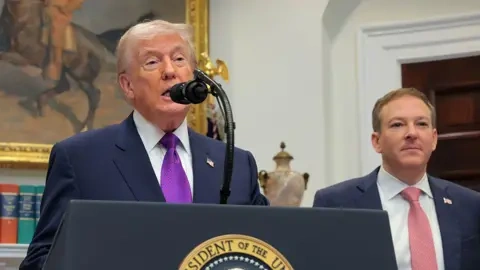
On February 12, 2026, the administration of President Donald Trump delivered what has been described as the largest deregulatory action in U.S. history by formally repealing the Environmental Protection Agency’s (EPA) 2009 “endangerment finding.” This landmark scientific and legal determination had long served as the foundation for federal climate regulation, empowering the EPA to regulate greenhouse gas emissions from vehicles, power plants, and industry under the Clean Air Act. Its removal has effectively dismantled the legal backbone of decades of environmental law.
While the White House frames the policy change as a victory for economic freedom and reduced regulatory burden, critics warn of far‑reaching consequences — for public health, climate change mitigation, global leadership, legal precedent, and economic stability. Below, we explore six possible effects of this seismic shift in U.S. climate policy.
1. Weakening Federal Authority to Regulate Greenhouse Gas Emissions
The most immediate and significant effect of revoking the endangerment finding is the loss of the EPA’s legal authority to regulate greenhouse gas emissions. Prior to the repeal, the finding justified federal limits on carbon dioxide, methane, and other heat‑trapping pollutants because they “endanger public health and welfare.” With its removal, the EPA can no longer assert that greenhouse gases qualify as pollutants under the Clean Air Act — meaning it no longer has a statutory basis to limit emissions.
This change unravels decades of climate regulations, including vehicle emissions standards and industrial pollution limits. Automakers and power plant operators could face fewer federal requirements to cut emissions, arguably slowing progress on reducing one of the largest contributors to global warming. This move effectively strips the federal government of its principal climate enforcement tool, forcing future environmental action to rely on new legislation from Congress or alternative legal bases.
2. Higher Emissions and Increased Climate Impacts
Removing the legal foundation for emissions regulation is likely to lead to an increase in greenhouse gas output — with significant environmental and societal impacts. According to scientific reporting, billions of extra tonnes of greenhouse gases could be released over the coming decades if regulatory authority remains weakened, exacerbating climate change.
A future without enforceable federal limits on carbon, methane, and other emissions means more intense heat waves, more frequent wildfires, rising sea levels, and a higher likelihood of extreme weather events. These outcomes not only harm ecosystems but also threaten infrastructure, agriculture, and human health — especially in vulnerable communities. While the Trump administration argues that deregulation will save costs and reduce red tape, critics counter that the long‑term climate impacts will impose even greater economic and human costs.
3. Public Health Risks from Increased Pollution
Climate change and air pollution are closely linked with public health outcomes. The endangerment finding recognized greenhouse gases as a threat to human health, forming the basis for national policies that limited pollutants known to contribute to respiratory and cardiovascular diseases, cancer risks, and other serious conditions.
By removing this legal justification, the federal government undermines regulatory safeguards designed to protect communities from dangerous air pollution. Without enforceable emissions standards, pollutants from vehicles, power plants, and heavy industry could increase — leading to more asthma attacks, hospital visits, and long‑term health complications, particularly in communities already burdened by environmental injustice.
Public health advocates warn that loosening climate protections will result in a higher incidence of chronic diseases and preventable deaths, placing additional strain on healthcare systems and disproportionately affecting low‑income and minority populations.
4. Economic Shifts: Winners and Losers
The economic implications of the policy change cut both ways. On one hand, Trump administration officials argue that repealing the endangerment finding and eliminating federal emissions regulations will reduce costs for businesses and consumers. For example, the White House projected savings of up to $1.3 trillion by 2055 through reduced vehicle regulatory requirements and lower compliance costs.
Proponents claim that loosening environmental rules can boost industries such as oil, gas, and coal by reducing operational constraints and accelerating production. Energy stocks have already surged in response to the policy change, reflecting investor optimism about short‑term profit opportunities for fossil fuel companies.
However, there are substantial economic drawbacks:
- Long‑term costs associated with climate change — including damage to infrastructure, agricultural losses, and disaster response — may far exceed short‑term savings.
- Public health costs from increased pollution could burden insurance systems, hospitals, and social services.
- Legal and regulatory uncertainty may deter investment in clean energy and technology sectors that helped drive economic growth in recent years.
Thus, while some industries may benefit, others — especially clean energy and climate tech — may lose competitive advantage in a market without stable federal regulation.
5. Retreat from Global Climate Leadership
The policy shift also has profound implications for the United States’ role in global climate governance. The U.S. historically played a major leadership role in international climate agreements such as the Paris Agreement and other cooperative frameworks aimed at curbing global emissions. However, this rollback of domestic climate policy signals a retreat from proactive global engagement, weakening U.S. credibility in climate diplomacy.
Other nations may view America as unreliable in upholding climate commitments, potentially leading to slower collective action and less cooperation on critical issues like renewable energy transition, carbon markets, and climate finance. Countries that depend on U.S. support or partnership in climate adaptation and mitigation efforts could reassess their alliances and strategies in light of newfound regulatory instability.
6. Legal Uncertainty and Judicial Battles
Eliminating the legal foundation for climate regulation transforms not only public policy but also the landscape of climate litigation and regulatory enforcement. Environmental groups, states, and advocacy organizations have already signaled their intent to challenge the repeal in court. Given that the original endangerment finding was upheld in multiple legal challenges — including by the U.S. Supreme Court’s 2007 ruling in Massachusetts v. EPA — future legal battles are expected to revolve around whether the EPA actually has the authority to retract a scientific and regulatory determination that stood for nearly two decades.
These legal battles could determine the long‑term viability of federal climate policy and shape the extent to which future administrations — Republican or Democratic — can restore or reframe climate regulations. Pending court decisions may also clarify whether the EPA can use alternative legal mechanisms to regulate emissions or whether Congress must step in with new legislative authority.
Conclusion: A Turning Point for U.S. Environmental Law
The repeal of the endangerment finding represents a historic pivot in U.S. climate policy, removing the legal pillar that enabled federal authority to regulate greenhouse gases for nearly two decades. This decision has reverberated widely across environmental, economic, and public health spheres: weakening federal regulatory power, raising emissions risks, threatening public health protections, creating economic winners and losers, diminishing global leadership, and setting the stage for protracted legal conflict.
Whether the consequences turn out to be temporary or long‑lasting depends on ongoing legal challenges, future legislative action, and how federal, state, and private actors respond. But one thing is clear: this policy change fundamentally alters the landscape of U.S. environmental regulation — and its effects will continue shaping climate policy in years to come.
References
- Council on Foreign Relations. (2026). Trump to revoke legal basis for key climate regulations. https://www.cfr.org/articles/trump-to-revoke-legal-basis-for-key-climate-regulations
- EnviroLink Network. (2026). Trump administration eliminates legal foundation for all US climate regulations in historic environmental rollback. https://www.envirolink.org/2026/02/15/trump-administration-eliminates-legal-foundation-for-all-us-climate-regulations-in-historic-environmental-rollback/
- Gizmodo. (2026). Trump just blew American climate policy to smithereens. https://gizmodo.com/trump-just-blew-american-climate-policy-to-smithereens-2000721247
- InvestmentNews. (2026). Energy stocks surge amid Trump climate rollback. https://www.investmentnews.com/equities/energy-stocks-surge-amid-trump-climate-rollback/265208
- Nature. (2026). US repeals key ‘endangerment finding’ that climate change is a public threat. https://www.nature.com/articles/d41586-026-00455-6



Leave a Reply