
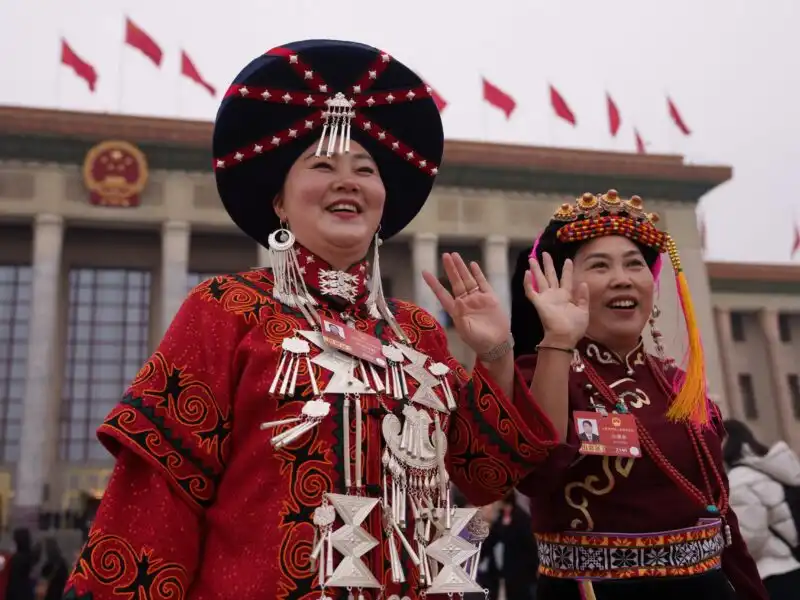
In a controversial move, China’s National People’s Congress recently passed a new Law on Promoting Ethnic Unity and Progress, sparking debates both domestically and internationally. While state officials emphasize the legislation’s role in fostering national cohesion, critics argue it risks further assimilating minority groups and eroding cultural diversity.
Overview of the Law
The new law, adopted on Thursday, is designed to promote ethnic unity and development across China’s diverse population. According to state officials, the legislation aims to:
- Strengthen social cohesion among ethnic groups
- Encourage cultural exchange and mutual understanding
- Support economic development in minority regions
The law reflects Beijing’s ongoing emphasis on ethnic harmony as a cornerstone of national stability, particularly in regions with significant minority populations such as Xinjiang, Tibet, and Inner Mongolia.
Government Perspective
Chinese authorities describe the law as a positive framework to ensure equality and cooperation between different ethnic communities. Key objectives highlighted by officials include:
- Educational initiatives promoting mutual respect and understanding
- Cultural programs showcasing minority traditions alongside mainstream Han culture
- Economic incentives to encourage development in minority-majority regions
Officials argue that these measures will benefit all citizens by reducing social tensions and creating opportunities for minority groups to thrive within the framework of national unity.
Critics Voice Concerns
Despite official claims, the law has drawn criticism from human rights groups, scholars, and international observers. Key concerns include:
- Risk of Forced Assimilation – Critics argue the law could be used to enforce the adoption of mainstream Han cultural practices at the expense of minority languages, traditions, and religious practices.
- Curbing Cultural Autonomy – Minority communities may face increased pressure to conform to national identity standards, limiting cultural expression.
- Legal Ambiguity – The law’s broad language leaves room for interpretation, raising fears that authorities could use it to justify restrictive measures on minority groups.
Some experts warn that, while the law is framed as a unity initiative, it could accelerate assimilation policies that have been controversial in China’s ethnic regions.
International Reactions
The international community has watched the law closely, with human rights organizations and foreign governments expressing concern about potential implications for ethnic minorities.
- The United Nations has emphasized the importance of protecting cultural rights and preserving linguistic and religious diversity.
- Several Western countries have called for transparent implementation to ensure the law does not undermine minority rights.
Analysts suggest that the law may influence China’s foreign perception, particularly regarding its treatment of Uyghurs, Tibetans, and other minority groups.
Historical Context
China has a long history of managing relations among its 56 recognized ethnic groups. Previous policies focused on economic development, education, and social integration, but critics argue that cultural assimilation has often accompanied these initiatives.
The new law appears to formalize these objectives, placing legal weight behind initiatives aimed at fostering a single national identity while promoting development.
Potential Implications
The passage of the law could have wide-ranging effects:
- On minority languages and traditions: Communities may face subtle or overt pressure to adopt mainstream cultural norms.
- On education systems: Schools in minority regions may increasingly prioritize national curricula over local cultural content.
- On regional governance: Authorities could leverage the law to implement policies aimed at social cohesion, which could limit local autonomy.
Observers caution that balancing ethnic unity with cultural preservation will be a key challenge in the coming years.
Conclusion
China’s new Law on Promoting Ethnic Unity and Progress underscores the government’s focus on national cohesion and development. While state officials highlight potential benefits in economic growth and social stability, critics warn it could deepen assimilation pressures on minority groups, threatening cultural diversity and autonomy.
As China moves forward with implementing the law, the international community, human rights advocates, and minority communities themselves will be watching closely, assessing whether it fosters unity or imposes conformity.
References / Citations
- “China Passes Ethnic Unity Law.” Reuters, March 2026. https://www.reuters.com/world/china/china-passes-ethnic-unity-law-2026-03-14/
- “China’s New Law on Ethnic Unity Raises Concerns.” BBC News, March 15, 2026. https://www.bbc.com/news/world-asia-64652612
- “Human Rights Groups Criticize China’s Ethnic Unity Law.” Al Jazeera, March 16, 2026. https://www.aljazeera.com/news/2026/3/16/china-ethnic-unity-law
- “China’s Ethnic Policies and Minority Rights.” Human Rights Watch, March 2026. https://www.hrw.org/news/2026/03/15/china-ethnic-unity-law



Leave a Reply